Ralph Abernathy Quotes
Bring on your tear gas, bring on your grenades, your new supplies of Mace, your state troopers and even your national guards. But let the record show we ain't going to be turned around.
Abernathy, Ralph. Speech at Mason Temple, Memphis. 3 Apr. 1968. Quoted in Honey, Michael K. Going Down Jericho Road: The Memphis Strike, Martin Luther King's Last Campaign. W. W. Norton & Company, 2007, p. 418.


This quotation is used by the moderate Egyptians and other moderate Arab leaders as well as Israelis and other experts in combating Islamic Fundamentalism to illustrate the thinking process of the Muslim fundamentalist terrorist leader. They are more than willing to sacrifice those they lead (though rarely themselves) if they think that something is to be gained. But if there is nothing to be gained, their “moral” responsibility requires not “wasting” their followers’ lives. Therefore, the way these experts believe they should deal with the radicals is to face them with overwhelming force (a variant of the Powell Doctrine) and never concede anything or let them gain anything from violence. A single concession makes the terrorism, sacrifice and violence worthwhile, but if there is no gain, the leader has wasted the lives of his followers and is less likely to initiate another attack.


This was one of the first calls for a slave strike in America.
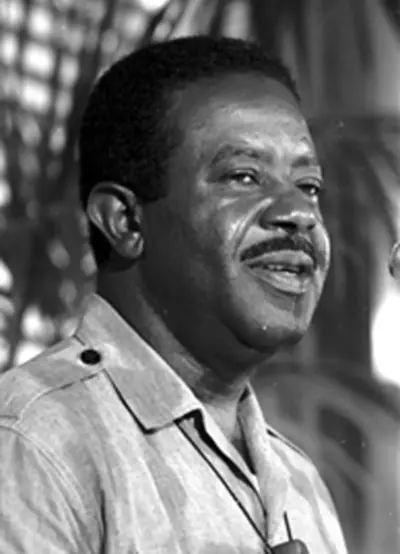
Ralph David Abernathy Sr. was an American civil rights activist and Baptist minister. He was ordained in the Baptist tradition in 1948. As a leader of the civil rights movement, he was a close friend and mentor of Martin Luther King Jr. He collaborated with King to create the Montgomery Improvement Association, which led to the Montgomery bus boycott. He also co-founded, and was an executive board member, of the Southern Christian Leadership Conference (SCLC). He became president of the SCLC following the assassination of King in 1968, where he led the Poor People's Campaign in Washington, D.C., among other marches and demonstrations for disenfranchised Americans. He also served as an advisory committee member of the Congress on Racial Equality (CORE).
