Stokely Carmichael Quotes
Black Power is a call for black people in this country to unite, to recognize their heritage, to build a sense of community. It is a call for black people to define their own goals, to lead their own organizations.
He was one of the people who popularized the term “Black Power”
Stokely Carmichael [Kwame Toure], 1942-1998, Chairman, Student Non-Violent Coordinating Committee, Honorary Prime Minister" of the Black Panther Party, Speech 1966
Sourced by: Eigen's Political and Historical Quotations


Thus testimony was an example of one of the reasons that Black Americans lobbied to end the use of the word, Negro, in official documents to describe them. “Negro” was a term used by whites to describe Blacks but rarely used by Blacks until Reconstruction. A century later, cultural and official language went back to the language that the slaves had used to describe each other and added “African American” as well.


This was the speech that started the "Black Power" Movement. The rally was held in a city park to Protest the murder just 10 days before of the civil rights activist, James Meredith. It also marked the break between the Student Nonviolent Coordinating Committee (SNCC) and the nonviolent movement lead by Martin Luther King. Because of that, the speech received so much publicity that "Black Power" became a significant political term instantly.

While this document may seem a little pompous today, this was a monumental event for American Blacks and many others in the world. Garvey was as well known at the time as Martin Luther King Jr. and f were later.


In his travels to the Americas Darwin saw some free Blacks but mostly slaves. He thought very highly of Blacks and was an inveterate opponent of slavery.

He had written this text on a newspaper when he was jailed in Birmingham for violating a court order not to demonstrate. A common tactic of the Southern segregationists was to have local segregationist judges issue injunctions against civil rights demonstrations on the grounds that they would promote violence. These were generally unconstitutional, but King and others were jailed until the legal appeal could even be heard.

Ironically Fort-Whiteman was arrested in Moscow in one of Stalin’s massive purges and sent to a Soviet Gulag where he died of starvation. He was one of several Americans who were Stalinist victims. Ironically, he was right about Blacks and revolutionary change, but whereas he thought the “revolution” would be a socialist and communist one, the “Civil Rights Revolution” was a legal, cultural and intellectual one. However, statements like this were taken advantage of by white racists who saw in every attempt to right the wrong of racial discrimination, a communist revolution in the making.


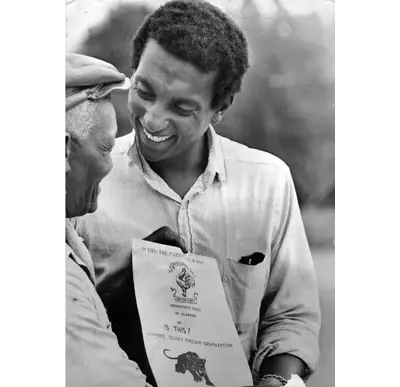
Kwame Ture was a prominent organizer in the civil rights movement in the United States and the global Pan-African movement. Born in Trinidad, he grew up in the United States from the age of 11 and became an activist while attending the Bronx High School of Science. He was a key leader in the development of the Black Power movement, first while leading the Student Nonviolent Coordinating Committee (SNCC), then as the "Honorary Prime Minister" of the Black Panther Party (BPP), and last as a leader of the All-African People's Revolutionary Party (A-APRP).
