Arthur Young Quotes
Banishment from court alone will force the French nobility to execute what the English do for pleasure—reside upon and adorn their estates.
Arthur Young, 1741-1820, English Writer and Contemporary Historian, The Example of France a Warning to England, 1793
Sourced by: Eigen's Political and Historical Quotations

At the time the number of small, independent land owners was diminishing.

Chivalry was a set of rules that regulated the behavior of knights especially as to their behavior in battle. It was the Medieval equivalent of the Geneva Convention. At the time knights fought against knights and peasants fought against peasants. After time the fighting was mixed. Previously, if a knight was subdued by other knights, he would surrender and promise to fight any more and that would be honored. But when a small group of peasants brought down a knight in armor, he could not surrender. He had probably killed other lightly armored peasants who were friends, and the peasants did not trust the knights. So typically, the peasants just killed the fallen knight. Social class determined the concepts of honor, fairness, trust, and chivalry came to an end.
Louis Napoleon had seized control of France and had very little popular support amongst the aristocracy and middle class. However, the Socialists leading the uprisings frightened them more than Louis Napoleon as the Socialists had the support of the peasants who resented the abuses of the aristocracy and many of the middle class. This was true class warfare and not at all what was possible in the United States when American conservatives would claim “class warfare” when there was a move for more progressive taxation. In Europe, class warfare really meant death and destruction, so for many who knew the history, the claim of “class warfare” was frightening and a large part of the “Red Scare” in the United States.


Beheading, if the headsman were competent, was a mich less painful way to die than the early forms of hanging where the rope strangled the condemned. As a result, it tended to be reserved but the upper classes and aristocrats of the day unless they were guilty of treason of coradice in warfare in which cases beheading was witheld.

The French manipulated the war news more than the other nations but nations all did to some extent tending to exaggerate the positive and minimize the negative.


The Germans had just passed a law making it illegal for a Jew to work as a teacher, professor, government official, scientist, or researcher. Szilard, a Jewish Hungarian politically astute physicist who was working in Germany was trying to organize a plan for the rescue of the Jewish German scientists—to place them in scientific or teaching positions in other countries. Kuhnwald, himself a Jew, was not only a very experienced politician, but one who had been following the Nazi Germany political scene “next door” to predict the future effect on Austria.

1st Earl of Beaconsfield
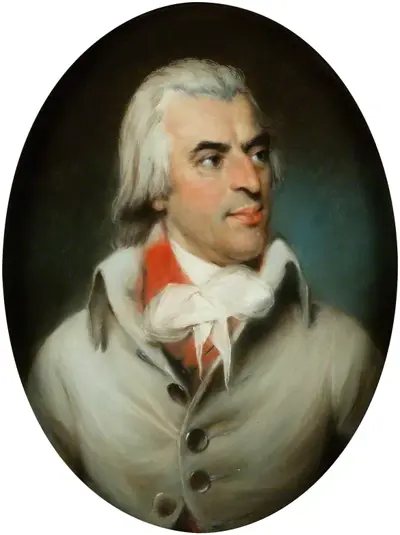
Arthur Young was an English writer on agriculture, economics and social statistics. Not himself successful as a farmer, he built on connections and activities as a publicist a substantial reputation as an expert on agricultural improvement. After the French Revolution of 1789, his views on its politics carried weight as an informed observer, and he became an important opponent of British reformers. Young is considered a major English writer on agriculture, although he is best known as a social and political observer. Also read widely were his Tour in Ireland (1780) and Travels in France (1792).
