Arthur Young Quotes
I sincerely regret the loss of that set of men who are called yeomen ... who really kept up the independence of the nation, and I am loth to see their lands now in the hands of monopolizing lords.
At the time the number of small, independent land owners was diminishing.
Arthur Young, 1741-1820, English Writer and Contemporary Historian, Inquiry into the present Price of Provisions and the Size of Farms, 1773
Sourced by: Eigen's Political and Historical Quotations


Muir had spoken at the Convention of Scottish Friends of the People at Edinburgh in 1792. He had advocated election reform allowing all men to vote, not just property owners and was sentenced by Braxfield to the Australian penal colony at Botany Bay. Braxfield expressed the deep distrust the establishment felt even for merchants, traders and others with fungible assets.


This was the basic document issued after the Russian Revolution establishing the basic legal and economic structure of the new Soviet State.


1st Viscount Bolingbroke. See {627799} for the origin of the bias against merchants and money men. It also represents a rigidity of class structure that characterized England until very recently. The landed gentry were the first class citizens. Usually titles went with the land. In America, someone who would be successful as a merchant or a banker could achieve the highest of social status and political influence. This was not true in England where a merchant that was far more wealthy than a landed lord was not accepted by the aristocracy.

Peter van der Kun. The Roman society had developed huge inequalities in the wealth of its citizens. Land was the measure of wealth as the value was produced by the farming of it. In an agrarian reform, the holdings of any one citizen was limited to 500 acres. In effect the Romans created a maximum of wealth. To the owners of the large tracts of land, this was a redistribution of wealth.


Eggleston was an accomplished writer who had served in the Confederate army of the Civil War. 20 year after the war he wrote a series of articles for the prestigious Northern Atlantic Monthly trying to convey the war from the Southerner’s point of view.


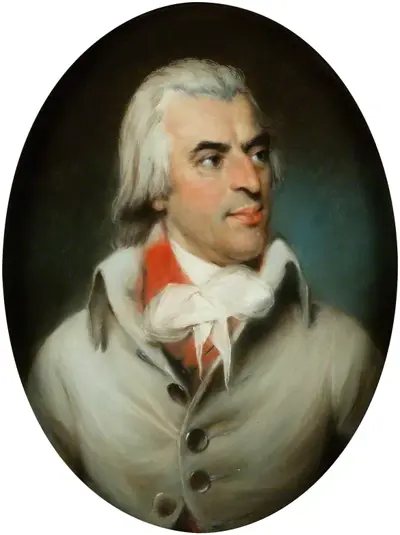
Arthur Young was an English writer on agriculture, economics and social statistics. Not himself successful as a farmer, he built on connections and activities as a publicist a substantial reputation as an expert on agricultural improvement. After the French Revolution of 1789, his views on its politics carried weight as an informed observer, and he became an important opponent of British reformers. Young is considered a major English writer on agriculture, although he is best known as a social and political observer. Also read widely were his Tour in Ireland (1780) and Travels in France (1792).
