Otto Hahn Quotes
At first the English were very surprised by our disregarding the Hague Convention. But from 1916 onward they used at least as much poison as we did.
Hahn, Otto. My Life. Translated by Ernst Kaiser and Eithne Wilkins, Herder and Herder, 1970, p. 118.


The First World War had recently ended with the mass of horrible casualties that resulted from the use of poison gas. Permanently debilitated veterans were trying to rebuild a life all over England. Many Englishmen wanted to ban English use of poison gas. Churchill objected as the Middle East was a cauldron of various forms of terrorism then in areas that the British were “responsible for” under the Peace Treaty. He argued that there was little difference be gas and shells, but that did not persuade many others. Churchill was outvoted and overruled and the British have never used poison gas since although they had a large supply and were prepared to use it in WWII if the Germans did. This quotation was a blot on Churchill’s reputation. One issue was whether or not it was human to use poison gas. Churchill was willing to say no where white Christians were concerned but was perfectly willing to use them on the “uncivilized”.
He was the Secretary of State in the War Office at the time. The Royal Air Force had suggested an experiment---gassing “recalcitrant Arabs” from the air. This predated Sadaam Hussein's gassing of Hussein's gassing of his own people by over 70 years.


See {77473} for evidence of German war crimes.


Almost every use of war weapons of mass destruction in history have been justified with the rationale that the total casualties would be reduced. It sometimes has been such as with the use of the atomic bomb in WWII but usually it has not. The same argument was made incidentally by Dr. Gattling, the inventor of the machine gun. In WWI far more men were killed by machine gun fire than poison gas.


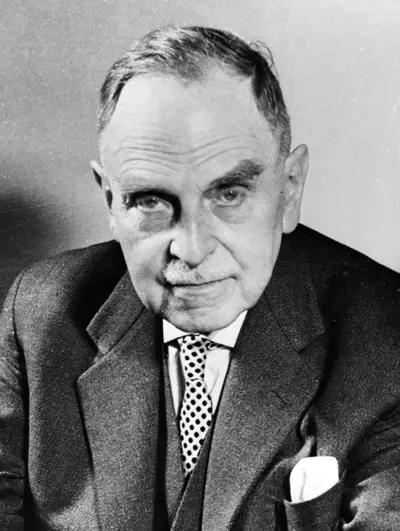
Otto Hahn was a German chemist, and a pioneer in the fields of radioactivity and radiochemistry. Hahn is referred to as the father of nuclear chemistry. Hahn and Lise Meitner discovered radioactive isotopes of radium, thorium, protactinium and uranium. He also discovered the phenomena of radioactive recoil and nuclear isomerism, and pioneered rubidium–strontium dating. In 1938, Hahn, Lise Meitner and Fritz Strassmann discovered nuclear fission, for which Hahn received the 1944 Nobel Prize for Chemistry. Nuclear fission was the basis for nuclear reactors and nuclear weapons.
