Harry Graf Kessler Quotes
Assaults, bomb-throwings, and murders continue in East Prussia, Bavaria, and Holstein. It has now been officially established that the cases of arson and bomb-throwings at Konigsberg were committed by Nazis. The Government held a Cabinet meeting on the subject yesterday, but confined itself to threatening vigorous action. It obviously hesitates about getting on the wrong side of the Nazis.
Harry Kessler, 1868-1937, French-born Intellectual, German Military Officer, Diary, August 5, 1932
Sourced by: Eigen's Political and Historical Quotations

Defending his administration and the Chicago police against the charge that they used excessive force and caused a police riot during the Democratic National Convention of 1968:

The Nazis and most of the Arabs were allies in WWII. The Jews of Palestine—although they were opposed to many of the British policies regarding Palestine—were active in the Allied cause contributing units to the British Army. Although the Germans were brutal to civilians, murdering millions, they refrained from public pronouncements or exhortations to kill civilians in most cases. The Arabs did not. The Mufti was actually given the rank of General in the Nazi SS and had his own SS unit. In this despicable exhortation he actually uses a concept and wording from the Koran. See {584355}. This quotation is important in that it refutes a common claim by some Palestinians that it was only the Germans who were responsible for the Holocaust and the post war Jewish Refugee problem and that the Palestinians had to bear the price rather than place Israel in Europe. This quotation and the other by the Grand Mufti prove that Palestinians were not only complicit in persecution of Jews but took a leadership and advocacy role.

See {585638} for the kind of statement that led people to fear him as a dictator.


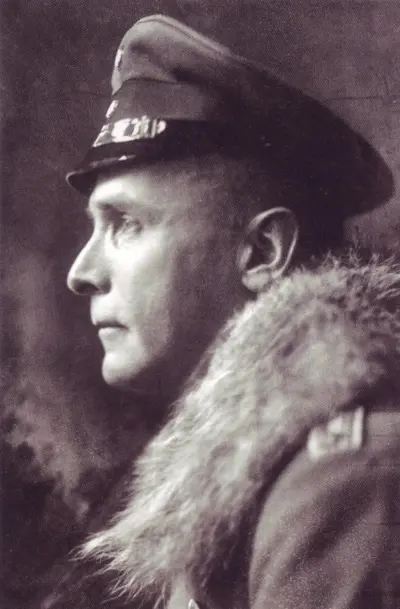
Harry Clemens Ulrich Graf von Kessler was an Anglo-German count, diplomat, writer, and patron of modern art. English translations of his diaries "Journey to the Abyss" (2011) and "Berlin in Lights" (1971) reveal anecdotes and details of artistic, theatrical, and political life in Europe, mostly in Germany, from the late 19th century through the collapse of Germany at the end of World War I until his death in Lyon in 1937.
