Andrew J. Bacevich Quotes
As with budget deficits or cost overruns on weapons purchases, members of the national security apparatus — elected and appointed officials, senior military officers and other policy insiders — accept war as a normal condition. Once, the avoidance of war figured as a national priority. On those occasions when war proved unavoidable, the idea was to end the conflict as expeditiously as possible on favorable terms. These precepts no longer apply. With war transformed into a perpetual endeavor, expectations have changed. In Washington, war has become tolerable, an enterprise to be managed rather than terminated as quickly as possible. Like other large-scale government projects, war now serves as a medium through which favors are bestowed, largess distributed and ambitions satisfied.
Andrew J. Bacevich, "The Never-Ending War in Afghanistan", Op Ed, The New York Times, March 13, 2017
Sourced by: Eigen's Political and Historical Quotations


This quotation illustrates Jefferson’s isolationist streak. He would have abandoned all American oceangoing ships and thereby avoid war. When he became President, however, he rethought his earlier position and was aggressive in developing the American Navy, using it at the risk of war.

The League was an undisguised Communist organization. Politicians were not too worried about applying their ministerial activities to unwholesome organizations. As one of the few Republicans in the Roosevelt Administration, he might have been more worried about whom he welcomed, but not so.


Annan had asked UN nations to contribute troops but few would.


While to Madison the principle that “war is better than tribute” was “settled policy”, there were many who disagreed. See {640867} as an example.


Many in the House were calling on England to fulfill its treaty obligations and stop Hitler and the Germans from overrunning Europe. Prime Minister Chamberlain, kept trying to appease Hitler by giving in to some of his demands. The more he gave in, the greater the demands became. Maxton was one of the few members of Parliament who wanted to give the Prime Minister more time to avoid war. Chamberlain’s efforts failed miserably and Hitler already had a huge advantage.

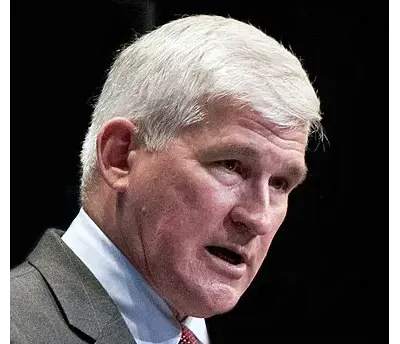
Andrew J. Bacevich Jr. is an American historian specializing in international relations, security studies, American foreign policy, and American diplomatic and military history. He is a Professor Emeritus of International Relations and History at the Boston University Frederick S. Pardee School of Global Studies. He is also a retired career officer in the Armor Branch of the United States Army, retiring with the rank of colonel. He is a former director of Boston University's Center for International Relations (from 1998 to 2005), now part of the Pardee School of Global Studies. Bacevich is the co-founder and president of the Quincy Institute for Responsible Statecraft.
