Plutarch Quotes
As to Caesar, when he was called upon, he gave no testimony against Clodius, nor did he affirm that he was certain of any injury done to his bed. He only said, He had divorced Pompeia because the wife of Caesar ought not only to be clear of such a crime, but of the very suspicion of it.
Plutarch. Plutarch's Lives. Translated by John Dryden, edited by Arthur Hugh Clough, vol. 4, Little, Brown, and Company, 1859, p. 265.


Caesar's wife, Pompeia was rumored to have had an affair. Caesar started divorce proceedings, but in the trial he admitted that he had no evidence whatsoever of her alleged infidelities. He was then asked why he wanted to divorce her:

Ms. Andrew Jackson’s divorce from her first husband was not done following all the legal requirements of the time. Technically, she was therefore a bigamist and an adulteress at the same time. While most Americans had no problem with this, there was then as there has been ever since a small, religiously driven, cultural conservative movement who objected to a President who was living with an adulteress in bigamy. Hammond was one of them. Just as Bill Clinton was very popular despite his sexual, moral transgressions, so was Jackson. However the conservatives of Washington DC made her life socially miserable.


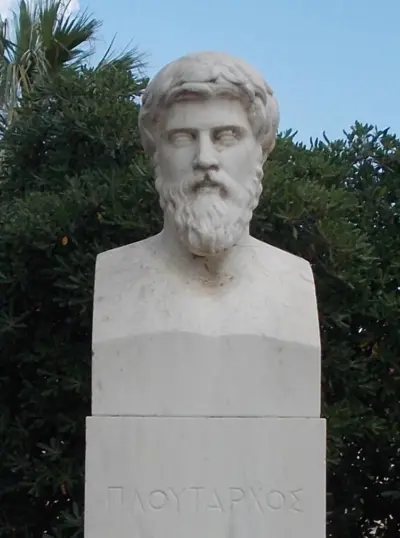
Plutarch (/ˈpluːtɑːrk/; Greek: Πλούταρχος, Ploútarchos; Koine Greek: [ˈplutarkʰos]; AD 46–after AD 119) was a Greek Middle Platonist philosopher, historian, biographer, essayist, and priest at the Temple of Apollo. He is known primarily for his Parallel Lives, a series of biographies of illustrious Greeks and Romans, and Moralia, a collection of essays and speeches. Upon becoming a Roman citizen, he was named Lucius Mestrius Plutarchus (Λούκιος Μέστριος Πλούταρχος).
