Vladimir Putin Quotes
As regards humanitarian issues and how to handle them, that was the Prime Minister's [Shinzō Abe] initiative. He brought the matter up at our last meeting in Lima and asked me straightforwardly whether we would agree to let Japanese citizens travel on a visa-free basis, resolve the issue in such a way as to enable them to visit the South Kurils, visit their native areas. I said at once that it was quite possible.
Putin, Vladimir. "Interview to Nippon TV and Yomiuri Shimbun." President of Russia, 13 Dec. 2016.


The minister had refused to be pressured by the George W. Bush Administration to sign an agreement with the US agreeing never to turn over an American or a foreign national working for America to the International Criminal Court (ICC). Even if a Peruvian or other non-American were working for an American Agency as an informant, agent, or other role, the country could not respect the treaty obligations that they had already made with regard to the ICC. Peru was “punished” losing $4 million aid. Nations were so “punished” while the State Department was spending huge sums to remedy negative opinion that so many nations had developed for the US during the George W. Bush administration. See {585493},65901 & {585496}, for more quotations on this. The US did not join the ICC Treaty as in some countries political considerations and different ethical values have labeled some American legitimate behavior as criminal and have attempted to hold individuals responsible for carrying out lawful orders. So many foreigners could understand the United States not wanting to deny Americans and others in the United States the protection of the United States Constitution, there was ire at the US pressuring others to boycott the ICC and break their existing treaties.


This problem in Latin America would continue for more than a century. This however, is the first suggestion that the United States should consider direct intervention to obtain justice for U. S. citizens—and businesses—rather than follow the traditional diplomatic procedures. We evolved from this to trying to control the government of the Latin American countries with a premium placed on stability rather than quality of fairness of the governments.

At the time Japan had a strong Fascist military wing and the army was not under the control of the civilian government. The government diplomats were less aggressive and expansionist as the military was. The Japanese diplomats would assure other governments like the United States of their peaceful intentions and then the Japanese army would do something that was completely contradictory. As the militarist wing gained domination over the government, the diplomats would strategically lie, and then claim what whatever the army did, was done be rogue officers and was not part of government policy.

The United States Senate must ratify all treaties before they can become effective. The Senate has been very reluctant to ratify treaties where the U. S. government or any of its citizens could come under the jurisdiction of any legal entity which did not abide by all the rights citizens are guaranteed by the U. S. Constitution. As a result, we do not recognize the World Court and the Treaty of Rome for example. The latter is the one that gives the World Court jurisdiction over a high level official who commits war crimes even in his own country. The result is that many dictators who do not want to be constrained by international law, do not sign the treaty fending off any pressure to do so by pointing to the United States. But Rothkopf and others who agree with him have not yet been able to come up with a mechanism that will assure American Constitutional rights to Americans who might be involved with the World Court and allow the court to punish the dictators who abuse their own population. The French would like their laws and constitution to control. The Russians, theirs. The Chinese, theirs. Every American public official takes an oath to defend The Constitution. That is their primary duty. Foreign policy and punishing international war criminals must take a lower priority.

The public desire to know about and influence the details about diplomatic affairs is not just a problem of the 21st century. Here the Secretary of State describes it in 1922.


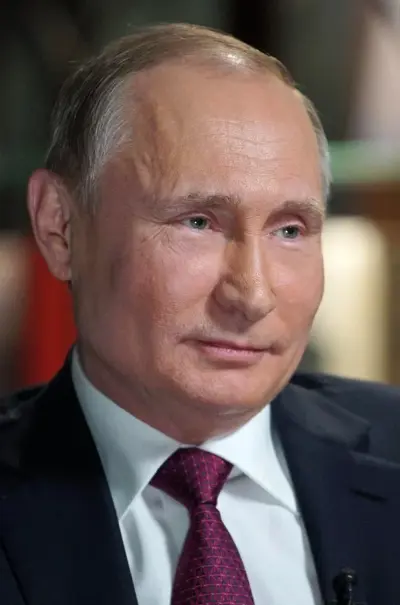
Vladimir Vladimirovich Putin is a Russian politician and former intelligence officer who is serving as the current president of Russia since 2012, previously being in the office from 1999 until 2008. He was also prime minister from 1999 to 2000 and again from 2008 to 2012. As of 2021, Putin is the second-longest serving European president, after Alexander Lukashenko.
