Joseph Stiglitz Quotes
As I noted in my Nobel lecture, an early insight in my work on the economics of information concerned the problem of appropriability - the difficulty that those who pay for information have in getting returns.
Stiglitz, Joseph E. The Roaring Nineties: A New History of the World's Most Prosperous Decade. W. W. Norton & Company, 2003.


Critics of his wondered how he, a world class neurosurgeon, would react to a political proposal to “throw the neurosurgeons out and use common sense instead.


This would seem a much easier solution to the problem of monopoly holders charging outrageous prices than trying to fix profits or lay a large tax on the profits. However, few governments ever do this. In many cases the patent holders control or heavily influence the government. There is in addition, in most Judeo-Christian societies an assumption that most people have a moral sense and will not take undue advantage of customers just because they have the power to do so. And in the most egregious cases of monopoly pricing there were many other patents where the inventors were not gouging the consumers. It is always been the minority of businesses that have taken gross advantage of patent monopolies. However at some periods, where there was an oligarchy, all the companies in an area abused their patent monopolies together. An example would be the pharmaceutical industry of the early 21st century.
The economic law of supply and demand does not really operate in most of the health care system as most people cannot place an economic value on their life and/or health. If we need an appendectomy to prevent death from infection, we do not consider doing the operation for $5,000 but say that if the price were $25,000 we would prefer to die. We will pay whatever we have to. Existential issues do not lend themselves to economics.


Abd al-Rahman Ibn Mohammad. He is generally regarded to be the World’s first social scientist. The largest statue in Tunisia of not of a military leader of king, but of this social scientist. This economic adage is uttered the world over, but the first writing of it that we have found is Ibn Khaludun


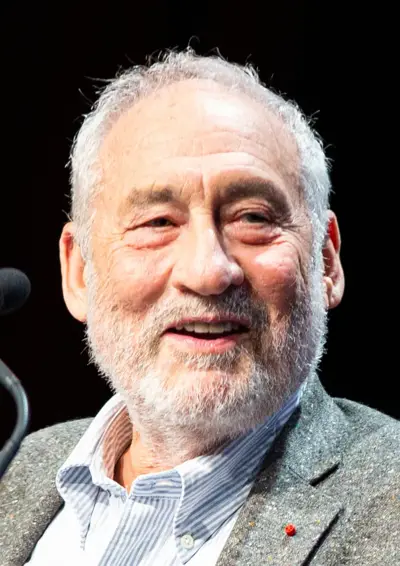
Joseph Eugene Stiglitz is an American economist, public policy analyst, and a professor at Columbia University. He is a recipient of the Nobel Memorial Prize in Economic Sciences (2001) and the John Bates Clark Medal (1979). He is a former senior vice president and chief economist of the World Bank and is a former member and chairman of the (US president's) Council of Economic Advisers. He is known for his support of Georgist public finance theory and for his critical view of the management of globalization, of laissez-faire economists (whom he calls "free-market fundamentalists"), and of international institutions such as the International Monetary Fund and the World Bank.
