Herman Willem Daendels Quotes
Any inhabitant of soldier in the service of Holland who opposes the orders of the Revolutionary Government will be punished by death as a rebel and traitor to his country.
The “Revolutionary Government” were the Patriot Coup leaders who had seized part of the country but the monarch still had many supporters including his soldiers. This proclamation, with the French troops to back it up, assured that the coup would succeed. Daendels had earlier fled to France when his first Dutch revolutionary efforts failed and he had a price on his head. He was in Paris during the French Revolution and was an enthusiastic supporter. For his support and with his military experience not associated with royalty, he was made a General of the Revolutionary French Army. When the Dutch Patriots tried again to revolt, the new French Government took their side and sent Daendels to Holland at the head of a small French Army to protect the Patriots. This was his position when he issued this proclamation to the great distress of William V and his supporters. William’s troops were particularly intimidated and many deserted and would not protect the monarch against the Patriots.
Herman Willem Daendels, 1762–1818, Dutch Politician & Military Leader, Patriot Revolutionary, General of the Revolutionary French Army, Governor General of the Dutch East Indies, Proclamation to the Citizens of Holland, 1794
Sourced by: Eigen's Political and Historical Quotations

The French had agreed that once the Dutch started the uprising, they would send French troops to support the revolution. The French Revolutionary government was ideologically opposed to the Dutch Monarchy of the House of Orange on their border nor did they want the British influence which existed by virtue of the support England gave to William V and the Orangists. When the uprising started, the French kept their word and sent in an army of invasion to support the revolutionary government. See {639776}.

Daendels had in earlier years fled to France when his first Dutch revolutionary efforts failed and he had a price on his head. He was in Paris during the French Revolution and was an enthusiastic supporter. For his support and with his military experience not associated with royalty, he was made a General of the Revolutionary French Army. When the Dutch Patriots tried again to revolt, the new French Government took their side and sent Daendels to Holland at the head of a small French Army to protect the Patriots. This was his position when he issued this proclamation to the great distress of William V and his supporters.
Hunting and fishing had been much restricted to aristocrats for whom it was a sport. But for common people it was part of subsistence. Just like so many corporations and wealthy people end up paying lower tax rates than the average person in modern American society, in Holland then it was the aristocrats who paid little or no taxes. And much of the tax revenue went to provide them with an opulent lifestyle. Ending their tax exemptions and their subsidies, would lower taxes on everyone else. And democracy would give the people control over the government. Daendels had in earlier years fled to France when his first Dutch revolutionary efforts failed and he had a price on his head. He was in Paris during the French Revolution and was an enthusiastic supporter. For his support and with his military experience not associated with royalty, he was made a General of the Revolutionary French Army. When the Dutch Patriots tried again to revolt, the new French Government took their side and sent Daendels to Holland at the head of a small French Army to protect the Patriots. This was his position when he issued this proclamation to the great distress of William V and his supporters.

Actually, these revolutionists were quite moderate and what they wanted was his abdication and for him to go to England but they used the fear of trial and beheading to induce him to leave rather than have a pitched battle. He did.


the Dutch monarchy supported by England The French fear of course was that the revolutionary fervor spreading to the bourgeois could easily spread to France, and that is exactly what happened 4 years later. See {639769} for more of his view on the Dutch revolutionary spirit that might infect France.

The coup started with the takeover of a large German Beer Hall where the political leaders of Bavaria were holding a meeting. Hitler and his Brownshirt thugs burst into the Hall. Hitler jumped up on a chair and shouted this statement waving a pistol in the air. Hitler was bluffing however, At the time he did not have the police or army supporting him, although they did soon after. This was the beginning of Hitler’s rise to power, the ruination of Germany, and tragedy for the world.

In 1786, many veterans of the American Revolution had still not yet been paid the promised wages for their military service by the new national government. The States however had imposed taxes on farms to fund the new state governments and pay the state’s war debts mostly to rich merchants. Many veterans could not pay the taxes and some were thrown into debtors’ prison, and others had their farms foreclosed. Led by Daniel Shays, a small group of Massachusetts men conducted a mini rebellion by closing local court houses and tried to take over the local state armory. The Governor put down the rebellion by force and the rebels were jailed. Adams, the the former governor, recommended the death penalty and several of the rebels were executed. Thomas Jefferson disagreed. See {604839} for his famous quotation on the subject. This was one of the early crises of the new country and it was handled very poorly and unfairly.


The revolution turned on many of its initiators including Vergniaud. He was guillotined along with other Girondists.

Claude-Henri de Rouvroy. He had married a Dutch Countess and settled in Utrecht so he knew the situation in Holland well. The Dutch Revolution was very much like the American Revolution in the it pitted one half of the establishment against the other.
The Dutch Monarch William V, Prince of Orange, was in a very precarious position and might be deposed. Officially Harris and the British were supporting him and Harris was giving him money to firm up his regime, but their great fear was that the French would support and control the Patriot Revolutionary movement, then quite active or even intervene militarily to aid the Patriots.
See {639757} for more of his view on the Dutch revolutionary spirit that might infect France. It did a few years later.
“The enemy were the Dutch revolutionists and the French who had sent a small army to assist the Dutch rebels. The Count had his Castle right near the border of Holland in the Austrian controlled part of the Netherlands.
William V, Prince of Orange, was in a very precarious position and might be deposed. Officially Harris and the British were supporting him and Harris was giving him money to firm up his regime, but their great fear was that the French would support and control the Patriot Revolutionary movement, then quite active. And William was very tentative in dealing with the growing Patriot revolutionary movement. Actually, to cover all eventualities, Harris was secretly aiding the Patriots as well. See {639752}.
The revolutionists were disorganized and unfocused after the Coup that brought them to power. This speech provided some focus for a while. Early in his career, as a Journalist working in Leiden, Holland, he was very active and helpful to the Dutch Patriots and Revolutionaries in their takeover of the government. He helped draft the New Dutch Constitution and participated in most of the new governments conventions.

William V, Prince of Orange, was a very hapless monarch of Holland who was ineffective in dealing with revolutionary discontent despite help and support of England. The King of England was resigned to Holland becoming, like France, a Republic. The English statesmen and diplomats, while aiding William, were also secretly providing money and other assistance to the Patriot rebels, to ensure good relations with the Dutch republican leaders.


The names cited were the British police and military forces. Fraternization was considered spying and brought death. That year the IRA executed over 100 of their fellow Irishmen, with no trial or chance to defend themselves. Some were scores and personal grudges being settled and others mistakes.
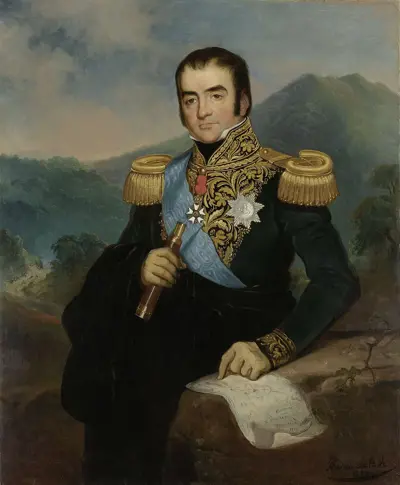
- Born: October 21, 1762
- Died: May 2, 1818
- Nationality:
- Profession:
Herman Willem Daendels was a Dutch revolutionary, general and politician who served as the 36th Governor General of the Dutch East Indies between 1808 and 1811.
