Chief Joseph Quotes
An Indian respects a brave man, but he despises a coward.
Joseph, Chief. "An Indian's View of Indian Affairs." The North American Review, vol. 128, no. 269, University of Northern Iowa, Apr. 1879, p. 423.


Thomson had thousands of pages of notes, minutes and other documents as a result of his role as Secretary of the Continental Congress. There was much in the documents to embarrass many of the patriots who after the Revolution were the “great men of the nation.” Although he was expected to write a history, he translated the Bible and studied bee keeping instead and reputations of some of the Founding Fathers were not tarnished.


Murtha had called for a transfer of the fighting from Americans to Iraqis. A highly decorated marine war hero wounded twice, he was then called a coward, by some Republican members of Congress like Schmidt and the Bush Administration—almost always by people who had never served in the military and often sought and obtained deferments. Schmidt later claimed that she had not known of Murtha’s war record. However, Schmidt commonly made nasty statements about other people. See her nickname.

In the attack on Fort Wagner, the color bearer was killed as was the Commanding Officer, Colonel Shaw. Carney raised the flag and led the men up the sand wall into the Confederate midst. They were vastly outnumbered and then retreated. Carney was the first Black to win the Medal of Honor.


Patton, though a great leader and fighting general, also was almost crazy and irrational at times. This quotation illustrates one of those periods. Somehow, most of the officers and enlisted men under his command were generally able to distinguish and live with him. In this case, no one tried to ferret out the cowards and kill them despite the Generals exhortation. Also, his—and other people’s notion that bravery is genetically inherited is scientifically incorrect.


Lacedaemonian refers to the ancient Greek city of Sparta,


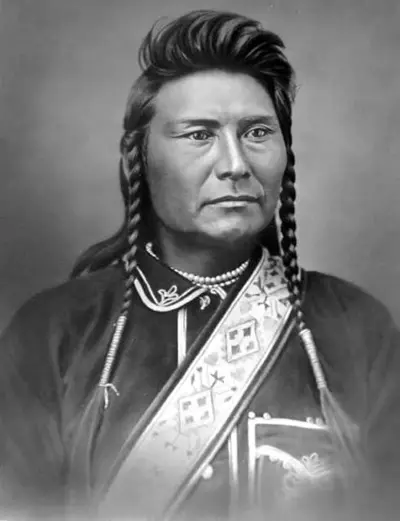
Hin-mah-too-yah-lat-kekt (or Hinmatóowyalahtq̓it in Americanist orthography), popularly known as Chief Joseph, Young Joseph, or Joseph the Younger, was a leader of the Wal-lam-wat-kain (Wallowa) band of Nez Perce, a Native American tribe of the interior Pacific Northwest region of the United States, in the latter half of the 19th century. He succeeded his father Tuekakas (Chief Joseph the Elder) in the early 1870s.
