Winston Churchill Quotes
An armed Communist advances against you and you react against him. Therefore, you are a reactionary!
During the Greek civil war, Churchill was accused of being a reactionary for supporting the royalists with the U.S., against the Communists. This was his reply.
Winston Churchill, 1874-1965, British Prime Minister (Conservative), Debate, House of Commons, 1946
Sourced by: Eigen's Political and Historical Quotations


This was only 6 years after the Russian Revolution. Communist Russia had extended its influence to much of the world without firing a shot. To many, communism looked like the future. The Russian inability to make communism work economically in the next 70 years destroyed most of its influence.


WWII had come while most of the world was still recovering from the Great Depression. Communists, the world over, were expecting a major revolution in America, Britain and most industrial nations. However, continuation of Theodore Roosevelt’s reforms, the Franklin Roosevelt’s New Deal, the strong American wartime economy, Eleanor Roosevelt’s human rights accomplishments at the UN, the Marshall Plan and Truman’s support of non-communist governments in Europe, and the Labor Party coming to power in Great Britain produced an atmosphere of progress and hope, which provided an alternative to a proletarian revolution and communism. The Cold War then was the only road for international communism.


He was discussing how to move the Republican Party to the extreme right. on a 2010 interview with Political Vindication Radio, and extreme California Radio Talk Show. Six years later he became Donald Trump’s Campaign CEO and after Trump won, he became the President’s Chief Policy Advisor. He was much closer to “taking it over”—the Republican Party.


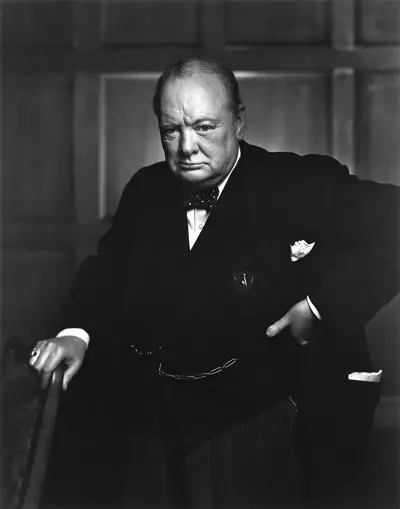
Sir Winston Leonard Spencer Churchill, KG, OM, CH, TD, DL, FRS, RA was the Prime Minister of the United Kingdom from 1940 to 1945, during the Second World War, and again from 1951 to 1955. Apart from two years between 1922 and 1924, Churchill was a Member of Parliament (MP) from 1900 to 1964 and represented a total of five constituencies. Ideologically an economic liberal and imperialist, he was for most of his career a member of the Conservative Party, as leader from 1940 to 1955. He was a member of the Liberal Party from 1904 to 1924. Churchill was also well known for his military career and as a historian, painter and writer, and among his many awards was the Nobel Prize in Literature.
