R. Palme Dutt Quotes
The participation of the Soviet Union in the League of Nations no more transforms the character of the League … than the participation of a Communist in Parliament transforms the character of Parliament.
R. Palme Dutt, *, English Political Theorist, Labour Monthly, January 1935
Sourced by: Eigen's Political and Historical Quotations

The Russian communists were very ambivalent about the League (see {600375}).


The United States Senate refused to ratify the Treaty that President Woodrow Wilson had negotiated establishing the League of Nations.

1st Earl Lloyd-George of Dwyfor. International organizations have been notoriously inept at protecting countries from aggression or minorities from persecution and ethnic cleansing and genocide. The Armenian genocide by the Turks was the exemplar at the time, but the UN peacekeepers refused to fight to prevent the Serbs from murdering 7,000 Bosnian Muslims. When they were protecting the Israeli-Palestinian borders, they did nothing to stop Arab Armies from attacking Israel right through the UN Troops. They did nothing to help prevent the Ruanda genocide. UN “troops” are rarely willing to risk their lives for the victimized people or the International Organization itself.

He was one of the first to recognize this phenomenon. See the related quotes for others who were early observers of the coming changes.

At the time, the Red Scare was prevalent and many Americans were terrified of communists. It was a very effective political tactic to imply that an opponent was a communist or communist sympathizer. For another harsh smear of Stevenson, see {619523}.

It is not the UN officials themselves who are responsible for this restriction on transparency and participation of NGOs. It is most of the member States who want it that way. They do not want organizations form their own countries appearing at International forums without their permission and their being under the control of the nation. Unfortunately, that also includes the United States to some extent.


In addition to the men who feared communism so much that they ignored the then greater menace of Fascism, there was also a small but influential pro Fascist influence in England which included the King who was forced to abdicate as The Duke of Windsor.


This was only 6 years after the Russian Revolution. Communist Russia had extended its influence to much of the world without firing a shot. To many, communism looked like the future. The Russian inability to make communism work economically in the next 70 years destroyed most of its influence.


The British suspected that the Turks of Anatolia were complicit with Bolshevism


who worked with the Communists. The Communists were to Flip-flop again when Russia needed arms and assistance to fight Hitler when the pact broke down. See {595773}
WWII had come while most of the world was still recovering from the Great Depression. Communists, the world over, were expecting a major revolution in America, Britain and most industrial nations. However, continuation of Theodore Roosevelt’s reforms, the Franklin Roosevelt’s New Deal, the strong American wartime economy, Eleanor Roosevelt’s human rights accomplishments at the UN, the Marshall Plan and Truman’s support of non-communist governments in Europe, and the Labor Party coming to power in Great Britain produced an atmosphere of progress and hope, which provided an alternative to a proletarian revolution and communism. The Cold War then was the only road for international communism.

Churchill put great store in personal interaction in diplomacy.


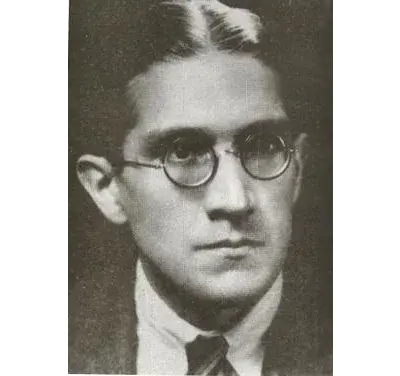
- Born: June 19, 1896
- Died: December 20, 1974
- Nationality:
- Profession: Editor Workers' Weekly (UK)
Rajani Palme Dutt, generally known as R. Palme Dutt, was a leading journalist and theoretician in the Communist Party of Great Britain.
