James Fenimore Cooper Quotes
America owes most of its social prejudices to the exaggerated religious opinions of the different sects which were so instrumental in establishing the colonies.
Cooper, James Fenimore. The American Democrat. H. & E. Phinney, 1838.


Jones, like many religious leaders at the time was an inveterate racist. He not only branded anyone advocating against segregation as “in opposition to God”. Jones also solicited the support of the Ku Klux Klan, and like many clerics would never condemn the KKK beatings, tortures, lynchings and murders.

In the middle of 2010, this organization was running public utility bus ads in major American cities.

Througout political history, including in America, opportunistic, unscruplous politicians have appealed to the prejudices and hates of subsets of the population for others (usually minorities) to get elected or obtain support for legislation and administrative action. In America this has been an element of all populist movements—an enemy. This quote is particularly enlightening in that it shows that the real need is to have a minority to focus the public against—which one is not as material as the fact that there is one.

The King wanted colonists for the American colonies, but did not want Roman Catholics.


Disraeli was the 1st Earl of Beaconsfield


Both Puritans and Quakers were persecuted and physically abused in England by the Anglican Church. The Puritans as soon as they became dominant in part of the American colonies began persecuting Quakers. The Quakers who were the majority in the Pennsylvania colony, however were tolerant of other religions. This history was another of the many reasons the Founding Fathers wanted no established church. A “scorpion” was a type of whip that was particularly painful.

Brant had an English style Missionary education and was an Anglican, belonging to the Church of England. During the American Revolution, he persuaded most of the Iroquois tribes to fight for the British against the revolutionary colonists. However, the Oneida tribe was not persuaded and joined the rebel side. A few New England Presbyterian missionaries had targeted the Oneida people, and when that tribe chose the “wrong” side, Brant believed that the reason was their different religious point of view. After the Revolution, Brant and his Iroquois followers were driven out of their American lands and escaped to Canada, while the Oneida were given complete title to their lands by George Washington.


The amazing thing about this quotation of 1913 is that at the end of the 20th century the Christians were again at the Muslims throats and Bosnian Muslims were being murdered and ethnically cleansed by the Roman Catholics of Croatia and the Eastern Orthodox Christians of Serbia. The hatred had persisted—the legacy of 1000 years before.


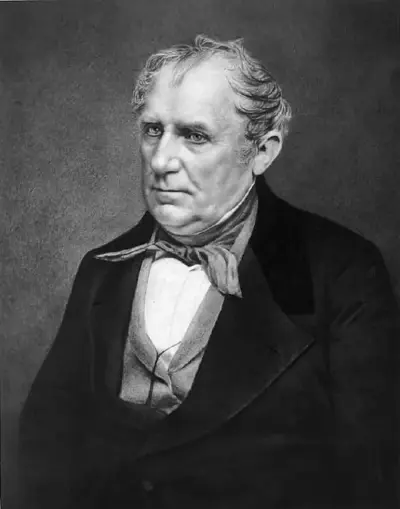
James Fenimore Cooper was an American writer of the first half of the 19th century. His historical romances depicting frontier and Native American life from the 17th to the 19th centuries created a unique form of American literature. He lived much of his boyhood and the last fifteen years of life in Cooperstown, New York, which was founded by his father William Cooper on property that he owned. Cooper became a member of the Episcopal Church shortly before his death and contributed generously to it. He attended Yale University for three years, where he was a member of the Linonian Society.
