Vladimir Lenin Quotes
America has become one of the foremost countries in regard to the depth of the abyss which lies between the handful of arrogant multimillionaires who wallow in filth and luxury, and the millions of working people who constantly live on the verge of pauperism.
Lenin, Vladimir I. "Letter to American Workers." Collected Works, Vol. 28, Progress Publishers, 1965, p. 62.


After Roosevelt, most eras of American politics more or less followed the pattern Roosevelt described herein as a “calamity”, with the anger becoming more or less intense. Jefferson thought that these were natural divisions of politics in all societies--{604810}. The thing that masked this for years was race and slavery. In Lincoln’s time there were liberals and conservatives in both parties if race were ignored. In Theodore Roosevelt’s era, he, Taft and others were generally liberal reformers, while a large number of Republicans were conservative supporters of the status quo. Some democrats were radical reformers like William Jennings Bryan while others were arch conservatives. Until 1964 and the Civil Rights Act there were many conservatives in the Democratic Party, but almost all switched to the Republican Party in anger. The Republican conservatives tended to drive the Republican liberals out of the party and for the last part of the 20th century Roosevelt’s “calamity” well described the American political scene, and the anger increased carrying partisan bitterness into the 21st century.


1st Earl of Beaconsfield. See Thomas Jefferson for a similar view.


Referring to the urban poverty in mid-nineteenth century Spain.


He saw great similarities between the terrible Indian Caste system and the different socio-economic classes of the West. Brahmins are the high caste Indians and the Sudras are low caste.


Most people who hear this quote for the first time assume that it originates with some radical socialist of the 1930s. However it came from a President of the United States and a Republican President at that. Few scholars will place this quotation correctly.

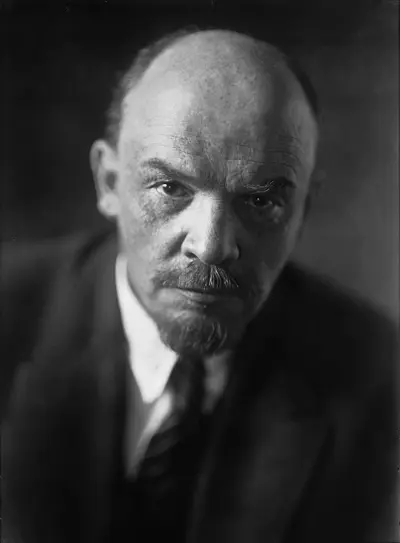
Vladimir Ilyich Ulyanov, better known by his alias Lenin, was a Russian revolutionary, politician, and political theorist. He served as the first and founding head of government of Soviet Russia from 1917 to 1924 and of the Soviet Union from 1922 to 1924. Under his administration, Russia, and later the Soviet Union, became a one-party socialist state governed by the Soviet Communist Party. A Marxist, he developed a variant of this communist ideology known as Leninism.
