Shigeru Yoshida Quotes
Almost a century has passed since Japan first entered the world community by concluding a treaty of amity with the United States of America in 1854.
Yoshida, Shigeru. "Japan and the Crisis in Asia." Foreign Affairs, vol. 29, no. 2, Jan. 1951, pp. 171-181.


He was very sensitive to the criticism of China’s human rights record. The Chinese leadership was very proud to their accomplishments of lifting hundreds of millions of people out of poverty and eliminating hunger and starvation, and many foreigners from developed nations were seemingly inattentive to the remarkable economic success in their focus on human rights shortcomings.


The trauma of the Armenian Genocide together with the Turkish official position of denying that it was a genocide has stunted diplomatic relations between the countries since 1915. See {638436}, {639043} and {639039}.


The final decision regarding the attack on Pearl Harbor and war with America had to be made. The Emperor Hirohito, Prime Minister Tojo, the full cabinet and leading elder statesmen were invited. Hara attended as one of the latter class. America had instituted an embargo of critical raw material whose end was contingent of Japan withdrawing from the territory that they had invaded and stop their territorial aggression in Asia, an aggression which some Japanese leaders—notably the military—was absolutely necessary to provide for the growing Japanese population and its increasing standard of living. At the time, an embargo was a powerfully effective weapon, which left Japan only two choices: Withdrawal or War. In modern times nations have chosen to endure and evade embargoes rather than be forced into undesirable positions.


Terrorism even then put strains on traditional diplomacy where bombers would take sanctuary or raise money in countries whose diplomatic policy was opposed to terrorism of all types. At this particular time, Irish terrorists would raise money in the United States to support the terrorists bombing English targets.

This resolution was bad enough for its overt racism. Ironically, the major victims of Japanese aggression have been Asians—China, Korea, Manchuria, and others. “White” empires had economic interests in throughout Asia and this was what Britten and many others were concerned with protecting. This quotation is important for another reason. At the very moment Britton introduced the resolution, Charles Evans Hughes our Secretary of State was welcoming a new, very high level ambassador to Washington. The administration had decided on a negotiating initiative and Britton and other Congressmen cut the legs out from under the administrations diplomatic efforts. It was particularly bad because one of the Japanese complaints about America and other white nations was their racism and discrimination against Asians. Congress undermining Administration diplomatic efforts has an all too frequent history in America.

“Dey” and “bey” were Arabic terms for the local ruler of an area.

She was ruling the largest country in the world and Denby’s opinion was held by most who knew China. What made her all the more remarkable was that, as a Chinese lower middle class women, she had no formal education, had rarely been allowed to travel out of her home or interact with men. As a young teen she was made a concubine to the Emperor and rarely left the harem. Like Abraham Lincoln she was self-taught and not only was able to seize power in China without any male advisor or patron, but she ruled as well as any world leader. In her later years she was pushing her country too fast and far, and the Western Powers had caused much domestic difficulty and to maintain power, she had to ally with the anti-West Boxers causing her reputation amongst Westerners to sink dramatically and thereafter was never much acknowledged for her remarkable political skills and accomplishments.


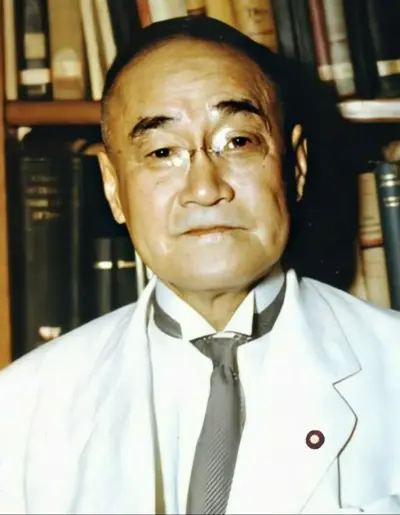
Shigeru Yoshida (吉田 茂, Yoshida Shigeru) was a Japanese diplomat and politician who served as Prime Minister of Japan from 1946 to 1947 and from 1948 to 1954. Yoshida was one of the longest-serving Japanese Prime Ministers, and is the third-longest serving Prime Minister of Post-occupation Japan.
