Harry Emerson Fosdick Quotes
All Fundamentalists are conservatives, but not all conservatives are Fundamentalists. The best conservatives can often give lessons to the liberals in true liberality of spirit, but the Fundamentalist program is essentially illiberal and intolerant.
Harry Emerson Fosdick, 1878-1969, Protestant Cleric and Author, Sermon, “Shall the Fundamentalists Win?” June 10, 1922
Sourced by: Eigen's Political and Historical Quotations


This is an excellent example of the political dirty trick of demonizing the opposition. There are Americans of different political persuasion all over the country. However, Limbaugh takes his opponents and describes them in terms that would be used for sexual predators or would be rapists or robbers. “Hiding in the shadows” and “lurking” are not contexts that we would normally use to describe political activists—especially those as numerous as liberals. Pejorative language can do the demonizing especially if it is repeated over and over again. This was illustrated by Joseph Geobbels the Nazi German propaganda minister who turned the technique into an art form. Ironically, he too in 1933 used the same technique to demonize liberals as well. See {601659}.


At the time most conservatives were very angry and hostile to liberals and attacked those who disagreed with them.

What if you are a conservative in a liberal environment? Then what you are conserving is liberalism.
His reference was to his experience as an undergraduate at Dartmouth, which he and associates views as a liberal organization, while others viewed it as a conservative bastion of the establishment.

Bruce is one of the few American Comedians to so offend the political establishment that he was constantly legally harassed throughout his career. He was actually criminally convicted in New York for obscenity. In 2003 he was posthumously pardoned by the New York Governor, the first posthumous pardon in state history.


Actually, there have been “paranoid” fear of opposition political viewpoints in America very often. In the early days of the Republic, the Federalists main concern was not England or other foreign enemies, but Jefferson’s Democratic Republicans. And those Jeffersonians were absolutely convinced that the greatest danger to America was the Federalists who would bring back a monarchy if they could. The Jacksonians triggered a similar polarization. The Civil War stemmed from this extreme. Even America’s most popular President, Franklin Delano Roosevelt, who was elected to 4 successive terms, was perceived as the major “enemy” of America along with his wife Eleanor and the other New Dealers.


Until the end of Harry Truman’s presidency, republicans and other conservatives tended to accuse democratic presidents and other leaders are being too aggressive and belligerent in foreign policy. Republicans tended to oppose defense spending and a strong military. After WWII the isolationist republicans tended to become hawks. They favored extensive military spending and an aggressive foreign policy. Since then, they have generally attacked democrats as being too weak. President Lyndon Johnson was very much intimidated by being perceived as weak, and many attribute his expansion of the Vietnam War to his desire to avoid this right wing criticism.
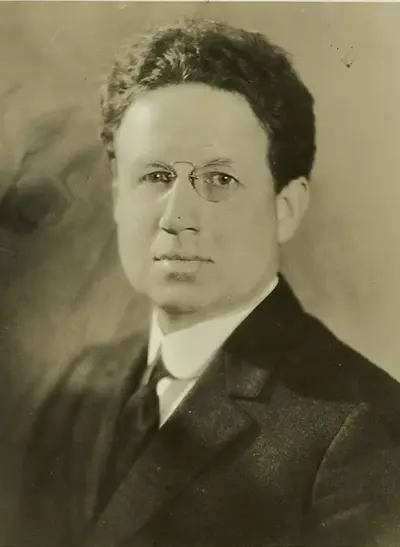
Harry Emerson Fosdick was an American pastor. Fosdick became a central figure in the Fundamentalist–Modernist controversy within American Protestantism in the 1920s and 1930s and was one of the most prominent liberal ministers of the early 20th century. Although a Baptist, he was called to serve as pastor, in New York City, at First Presbyterian Church in Manhattan's West Village, and then at the historic, inter-denominational Riverside Church in Morningside Heights, Manhattan.
