D. H. Lawrence Quotes
After the war [WW I], the soul of the people will be so maimed and so injured that it is horrible to think of.
D. H. Lawrence, 1885-1930, British Writer, February 1, 1915
Sourced by: Eigen's Political and Historical Quotations


The Ambassador of Bavaria represented an area where the politicians saw democrats and socialists as their great enemy, as did many of the leading right wing conservatives in all of Germany. They believed that a great war would give them a chance to crush democratic socialism in Europe. Bethmann warned that just the opposite might result, and indeed it did. He was correct. Many of the crowned heads of Europe were deposed and the democratic socialists emerged as a major political factor in the victorious democracies. Bethmann-Hollweg, however, was not a strong leader and could not prevent the Conservatives, the military leaders, and Kaiser Wilhelm from initiating WWI.

The Congress had applauded his message vigorously.


This may have been the origin of the famous Stalin later quotation of very similar sentiment {616657}. No one is certain if Stalin had ever seen this work. Or he might have come upon it independently. The original source does not mention Massigli by name. However the description of the “Diplomat vom Quai d’Orsay” fits Massigli and his expertise so we attribute it to him. However, he was not the first to express this idea. The Anglican Bishop of London, Beilby Porteus, appears to have been the earliest—See {627489}.

Although an ordained Methodist Minister, the Methodist Episcopal Church refused to allow her to preach.

He was warning the majority and blaming them for what was to happen. Ironically, at the end of the First World War, Germany was so harshly treated because the allies felt that the Germans had been aforewarned not only by others but by opposition Germans as well.

He was the most decorated soldier in WWII with 21 medals.


The General was experimenting with LSD and other substances that would cause major mental effects to be used as a weapon. This was before the ban on chemical warfare.
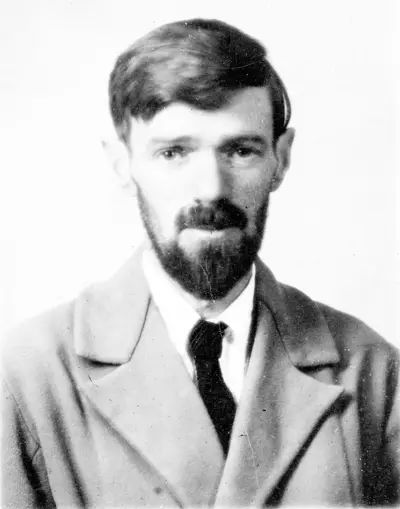
David Herbert Lawrence was an English writer and poet. His collected works represent, among other things, an extended reflection upon the dehumanising effects of modernity and industrialisation. Lawrence's writing explores issues such as sexuality, emotional health, vitality, spontaneity, and instinct. His works include Sons and Lovers, The Rainbow, Women in Love, and Lady Chatterley's Lover.
