Pankaj Mishra Quotes
After the oil crisis of 1973, many European countries tightened restrictions on immigrants. By then, millions of Muslims had decided to settle in Europe, preferring the social segregation and racial discrimination they found in the West to political and economic turmoil at home.
Mishra, Pankaj. Bland Fanatics: Liberals, Race, and Empire. Farrar, Straus and Giroux, 2020.


The United States policies at the time encouraged tens of thousands of foreigners to study in America—especially mathematics, science and engineering. Then after they graduate we expel them despite the fact that we have a great labor shortage of these technical skill areas. The result is that the American economy lags in one of its most important areas, high technology for lack of qualified people to fill the jobs. Larger American companies then set up operations overseas and hire many of the people who we kicked out, so they do not pay any taxes to America. The best and most ambitious of these American trained foreigners, then start their own businesses abroad, create many jobs that never benefit Americans and then sell to America competing with American firms. New York City alone had tens of thousands of open jobs at very high salaries for which there were no Americans to fill while the New York schools had trained enough foreigners to fill the jobs, but our national policies forced the best and the brightest to leave and compete with us.

This is a complaint similar to that made by anti-immigrant Americans. France, like most other countries of the world, has never had the large scale immigration of today, nor have they had such a large proportion of the same ethnicity at once—in this case, Muslim North Africans. There were never, before the last decades, enough immigrants of any ethnicity in France to have a choice of maintaining their traditional languages and culture and not learning French or otherwise assimilating. America, in contrast, had large immigrations of different ethnicities, and despite the erroneous beliefs of immigration opponents, these blocs of immigrants have wherever there was sufficient density—usually cities, they maintained their old language and other customs. However, their children and the next generation in almost all cases have abandoned the language and many of the customs of the old country. This was true of the Germans, the Irish, the Italians, the European Jews, the Russian Jews, the Scandinavians’, and the Hispanics with their different cultures.


The issue of admission of relatives of citizens had, in the 20th century, become controversial as some political forces worked to restrict immigration. The result of politicizing this issue was that the relatives who would receive immigration priorities would change every time Congress legislated about anything involving immigration and asylum. Immigrants from some countries could have their aunts and uncles get priority while other countries it was only siblings, children and parents. And still others would be children only. There was also racial and ethnic discrimination in that nations with white populations received a broader right to have relatives immigrate than non-white.


He was referring to North African and other third world immigrants. France’s second largest ethnic group had become Muslims from North Africa. But they were only 10 percent of the population.
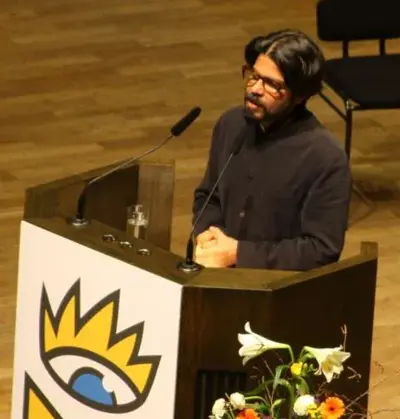
Pankaj Mishra is an Indian essayist and novelist and a recipient of the 2014 Windham–Campbell Prize for non-fiction.
