Joseph Smith Jr. Quotes
After the April Conference we will have General Conferences all over the nation, and I will attend as many as convenient. Tell the people we have had Whig and Democratic Presidents long enough: we want a President of the United States. If I ever get into the presidential chair, I will protect the people in their rights and liberties.
Smith had written to most of the then likely Presidential candidates of both major parties asking for their position on the Mormons who were facing persecution wherever they went. None of the politicians would make any satisfactory commitments. Smith took Direct Action and became the only major religious official to have run for the Presidency of the United States until Pat Robertson tried and failed in 2000. Smith’s assassination shortly thereafter cut his run for the Presidency short before it made much headway and politically he had no chance to affect the race.
Joseph Smith, Jr., 1805-1844, Founder of the Mormon Religion, Mormon Candidate for President of the United States, Statement announcing his Presidential Candidacy to the 12 Ruling Leaders of the Church, January 29, 1844
Sourced by: Eigen's Political and Historical Quotations

Abraham Lincoln was the only third party candidate to win the presidency in U.S. history. However, when he was nominated, there was little conviction among Republicans that a third or fourth party could actually win:. Lincoln's primary opponent, William H. Seward


Smith and his Mormon followers had been attacked and persecuted by mobs in various communities for availing themselves of their constitutional rights to follow their own religion. In those days the governor did not have command of a national guard and had to ask the President for troops to put down a mob or insurrection. Some Governors were in sympathy with the mobs and would do nothing to protect the Mormons. Smith had written to most of the then likely Presidential candidates of both major parties asking for their position on the Mormons who were facing persecution wherever they went. None of the politicians would make any satisfactory commitments. Smith took Direct Action and became the only major religious official to have run for the Presidency of the United States until Pat Robertson tried and failed in 2000. Smith’s assassination shortly thereafter cut his run for the Presidency short before it made much headway and politically he had no chance to affect the race.

Richard M. Nixon was, even before the Watergate scandal very disliked as both a politician and a person. However, this was one of the first major public figures who castigated Nixon, the man, in a major public address. Many followed, In this collection there are many more insults to Richard M. Nixon than any other politican.

One of their friends was then Judge Stephen Douglas who advocated equality for Mormons and appointed Mormons to various posts. Mormon support helped the Democrat’s Thomas L. Ford win the next gubernatorial race over his Whig opponent who was virulently anti-Mormon.


In reality, Donald Trump won despite the opoposition of the leaderships of both political parties. In the Republican Primary elections he defeated the condidates preferred by the Republican leaders and elected officials accross the country. However, once he won the promaries, most--many reluctantly--supported him rather than the Democrat. Then Tump, to almsot everyone's surprise, bested Hillary Clinton, the Democratic Candidate and became President.

Harriman was the senior Democratic leader of the era. Every aspiring Democratic politician would make it his business to get to meet Harriman and try and get his endorsement. However, Carter was not a typical politician and when he decided to run for the Presidency, he had not even met many of the leading Democratic Party leaders. Harriman, a man of the old school, could not believe that anyone in the party who he did not know could possibly have the connections and the sophistication to win the presidency. However, Watergate had seared the American political soul and voters were not looking for a veteran, sophisticated politician. Nixon had been that.


This is a remarkable quotation. Because of the issue of plural marriage, many Americans regarded the early Mormons as having no respect for the country or its laws. However, as this quotation shows, the Mormon leader, prophet and founder specifically commanded his people to not only support the United States law but specifically mentions The Constitution. He told his followers that God approves of the United States constitution and states that it is in a sense universal, belonging to all mankind. There is no other religious founder who so thoroughly validated a national constitution and system in the history of the world. Yet he was assassinated and after his death, the United States Government was almost in a full scale war with the Mormons. There is still a vestige of anti-Mormonism in the United States among some Christian Fundamentalists. Yet the Mormon church has been a thoroughly American church, historically, conceptually, and philosophically It has even shared some of the American historical errors such as its sexism and discriminatory rules and view of Blacks. The latter has been remedied {625268} as the rest of America has changed, and the discriminatory role of women is very traditional and is shared with most other Christian fundamentalists and orthodox Jews.

JFK was running for the Presidency and was Roman Catholic. There was a great deal of anti-Catholic prejudice in the country with many people fearing that a Catholic President would mean Papal control of the United States. Peale was the most influential American clergyman of the day, and while he did not overtly oppose the Kennedy candidacy, he did state that he thought the election of a Catholic would profoundly change America. Kennedy won by a thin margin, but none of the events that the anti-Catholics feared, came to pass.

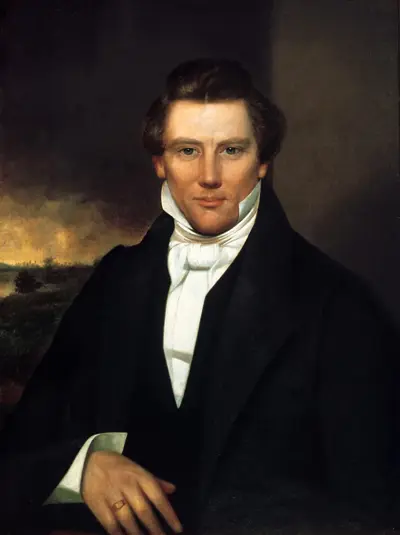
Joseph Smith, Jr. was an American religious leader and founder of Mormonism and the Latter Day Saint movement. When he was twenty-four, Smith published the Book of Mormon. By the time of his death fourteen years later, he had attracted tens of thousands of followers and founded a religious culture that continues to the present.
