Morrison R. Waite Quotes
Actions in violation of social duties or subversive of good order.
Justice Waite asserted that religious claims exempted no one, because constitutional guarantees of religious freedom had to do with beliefs only, and did not protect these actions
Morrison R. Waite, 1816-1888, Chief Justice, U. S. Supreme Court, Reynolds v. the United States, 1879
Sourced by: Eigen's Political and Historical Quotations

Anne Hutchinson was tried by the Puritan religious and civil court for heresy. She started with Bible Study classes in her home and drew a substantial following. The clergy at the time were threatened and outraged. It was one thing for a woman to teach Bible Study to other women, but to also have men with the women was too much. The decision of the court was that she was banished from the colony. See {584753}.

This was the second liberal constitution in the world following on the heels of United States Constitution upon which some of this constitution is based. See {585394}. This particular clause is noteworthy for its internal contradiction regarding freedom of religion. After making it illegal to convert any Catholic to any other religion, the constitution goes on to establish freedom of religion. So one was guaranteed the right to practice one’s own religion but if the religion advocated evangelizing and converting others, that part of religious freedom was banned when targeting Roman Catholics.

This absurd law was in existence for 22 years. But its vestiges lasted for over 100 years. It was not until the 1880s that it became fashionable to celebrate Christmas in Boston. The founding fathers were well aware of many early American laws interfering with religion and many religious laws interfering with those who did not believe a particular doctrine. The separation of church and state evolved from years of European abuses and American abuses as well.

The British Women’s Temperance Union was a firm advocate of the banning of ice cream shops as well as saloons on the Sabbath.

See {608419}, {604665} and {604664} regarding the government’s destruction of Buddist statues.
The debate was on a proposal to increase the female marriage age to 14. Most objected to it on the grounds that it violated Hindu religious tradition.


Note that in addition to getting rid of the authority of the King, New York—over a decade before the Bill of Rights and the First Amendment, provided for a ban on an established church or favoring one Christian sect over another. Even then New York was a multi religious and multi ethnic society with its strong Dutch tradition along with the English tradition. New York did not go as far as the First Amendment would do later in terms of freedom of religion. NY only mentioned Christian sects. However they did implement separation of church and state and an establishment clause. See {621429} for another clause that ensures separation of church and state.


Alito speaking at the University of Notre Dame Law School’s Religious Liberty Summit in Rome, July 21, 2022.

English history has been replete with Catholic-Protestant conflict and because of the British Empire, the British historians were very familiar with the Islamic conflict with Christianity, Judaism, Hinduism, and other religions. Toynbee was very worried about the future religious struggles and he turned out to be right. Freedom isi amenable to different interpretations and compromise. Religion also has different interpretations, but many of the religious fundamentalists see compromise as an offence to God and his word. So religion is less amenable to political, civil or social structuring and compromise.


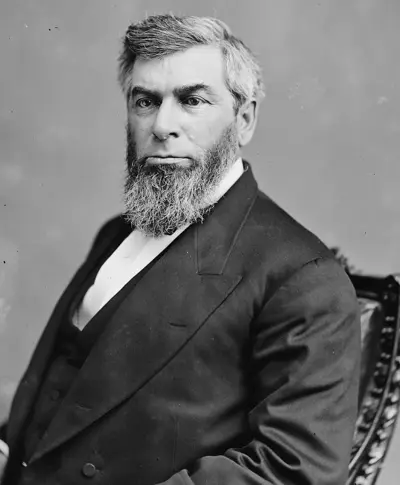
Morrison Remick "Mott" Waite was an attorney, judge, and politician from Ohio. He served as the seventh Chief Justice of the United States from 1874 to his death in 1888. During his tenure, the Waite Court took a narrow interpretation of federal authority related to laws and amendments that were passed during the Reconstruction Era to expand the rights of freedmen and protect them from attacks by vigilante groups such as the Ku Klux Klan.
