Albert I Quotes
A nation which defends itself demands the respect of all. Such a nation cannot perish.
Albert I, 1875-1934, King of Belgium, Address to the Belgian Parliament, 1914
Sourced by: Eigen's Political and Historical Quotations


This is a very important quotation in that there are some who believed—then and now—narrowly that self defense is limited to responding to only physical attacks on the United States per se. Kellogg made it clear that it includes attacks on the United States and any of its possessions. Most important it allows response to any “danger” to the United States. By this definition, for example, if Saddam had been developing weapons of mass destruction in the Iraq war, the pre-emptive attack would have been self-defense. Since the claim of weapons development was bogus, it was not self defense. The key variable a reasonable danger. Nations determine that by what others do and say. In 2011, if Iran were developing nuclear weapons the U. S. could attack as an act of self defense because the Iranian highest level officials have called for “death to the United States”. When they just had the intention to harm us, there was no danger. But when they add the means to harm us to the intention, that is a danger. Likewise other nations may act in self defense if a potential enemy threatens to endanger them and has the means to carry out the threats or desires.


During her adult life, she was the de facto ruler of China. This quotation is very important because it gives us an important insight into Chinese motives and historical drivers. The first reason is something almost all countries and cultures can identify with, but the second--to avoid being looked down—was just as important. Americans are relatively uncaring what the citizens of other countries think about them, but the Chinese do. So do other nationalities and cultures like the Arabs, the Iranians, many of the South American cultures. Often it takes on a different world like “dignity” or “respect”.


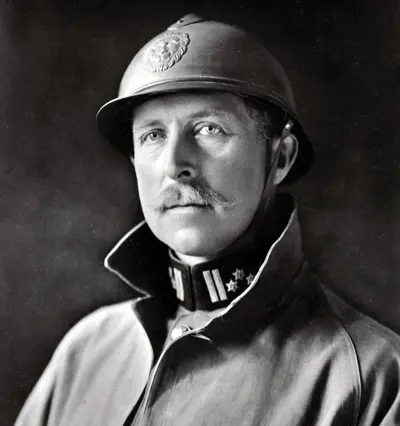
Albert I reigned as King of the Belgians from 1909 to 1934. He ruled during an eventful period in the history of Belgium, which included the period of World War I (1914–1918), when 90 percent of Belgium was overrun, occupied, and ruled by the German Empire. Other crucial issues included the adoption of the Treaty of Versailles in June 1919, the ruling of the Belgian Congo as an overseas possession of the Kingdom of Belgium along with the League of Nations mandate of Ruanda-Urundi, the reconstruction of Belgium following the war, and the first five years of the Great Depression (1929–1934). King Albert died in a mountaineering accident in eastern Belgium in 1934, at the age of 58, and he was succeeded by his son Leopold III (r. 1934–1951). He is popularly referred to as the "Knight King" (roi-chevalier or koning-ridder) or "Soldier King" (roi-soldat or koning-soldaat) in Belgium in reference to his role during World War I.
