George F. Kennan Quotes
A foreign policy aimed at the achievement of total security is the one thing I can think of that is entirely capable of bringing this country to a point where it will have no security at all. And a ruthless, reckless insistence on attempting to stamp out everything that could conceivably constitute a reflection of improper foreign influence in our national life, regardless of the actual damage it is doing to the cost of eliminating it, in terms of other American values, is the one thing I can think of that should reduce us all to a point where the very independence we are seeking to defend would be meaningless, for we would be doing things to ourselves as vicious and tyrannical as any that might be brought to us from outside.
George F. Kennan, 1904-2005, Historian & U.S. Ambassador to Russia and Yugoslavia, Radcliffe College Commencement Address, June 16, 1954
Sourced by: Eigen's Political and Historical Quotations

Earlier in the Arab-Israeli conflict United Nations troops were stationed at the borders to prevent either side from attacking the other. The Arabs mounted a major attack and the United Nations troops ran and did not fight. Ever since then, Israel policy was never to depend on any other than Israel to defend the country and the people.

This is likely the source of the paraphrased “quote” attributed to Lincoln: America will never be destroyed from the outside. If we falter and lose our freedoms, it will be because we destroyed ourselves. See related quote.


There has in the United States, since the Constitution was ratified, a tension in every war or conflict, where some Americans wanted to reduce civil rights in order to better cope with the conflict and others observed that what we were fighting for is precisely those civil rights and liberties. John Adams and the Federalists, did not want anyone to be allowed to publicly criticize the Government while we were in conflict with Great Britain. They passed the Alien and Sedition Acts. Thomas Jefferson and the Republicans felt that that the freedom should not be given up in the name of national security—we could prevail without that incursion on rights. They repealed the Adams laws. In WWI, Democratic President Woodrow Wilson wanted to jail anyone who claimed that the military draft was improper, immoral or illegal, and he did. Republicans, when they assumed office, then released the prisoners and restored freedom of speech. In the war on terror, most Republicans like sessions, wanted to torture prisoners, allow the imprisonment of suspected terrorists indefinitely without any charges or trial, and bug American telephone calls without the usually required court warrants. Democrats disagreed. That stimulated Sessions statement.

See {627882} for one of the incidents that caused international repercussions. Thailand is a totally food self sufficient country and so is not subject to foreign pressure as much as if it were a food importer and not an exporter.


One difficulty of diplomacy with many Islamic leaders is that the culture produces very aggressive rhetoric and very aggressive actions like Islamic terrorism. This quotation is often cited to demonstrate that it is the Iranians that had decided that America is it’s enemy; that America is to be humbled; and that their weapons development are targeted at America. This along with the most frequent Iranian slogan, “Death to America,” for many argues for preemptive military action or maintenance of a high state of readiness. Given statements like this from the leading soldier of the theocracy, there is little doubt that Iranian nuclear weapons would be a great danger to America. Therefore when Iran complains that America did not object to the fact that other nations have the nuclear bomb, they do not take their own rhetoric into account. No other nation with possible nuclear capability has made America its major military adversity and claims as an objective to humble the United States.


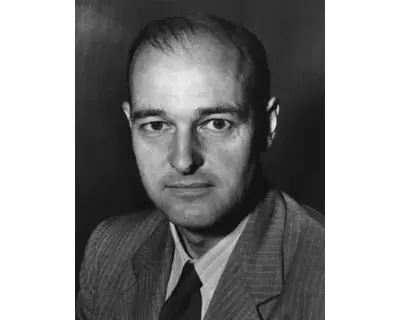
George Frost Kennan was an American diplomat and historian. He was best known as an advocate of a policy of containment of Soviet expansion during the Cold War. He lectured widely and wrote scholarly histories of the relations between the USSR and the United States. He was also one of the group of foreign policy elders known as "The Wise Men".
