Joseph Stalin Quotes
A certain inequality in regard to property still exists in a socialist society. But in a socialist society there is no unemployment, no exploitation, no oppression of nationalities.
Stalin, Joseph. The Stalin-Howard Interview. International Publishers, 1936.


He was writing about America and many of the industrial democracies who at the time, as a result of globalziation, technology, government action and inaction, and other factors, had gone through a 30 year period of increasing disparities.

Salisbury was a brilliant, effective prime minister, but he was a snob and not a democrat. See {639131}.

He was a strong foe of both Communism and Capitalism. He was one of the first critics to describe the de facto inequality of Communism.

Vladimir Lenin. After the Russian Revolution the Soviet State rejected the use of a copyright and patent system with the notion that all intellectual property belonged to the state. According to some political economic theorists, this would portend great difficulty in obtaining innovative and creative output in the arts, industry, and sciences. However, in the next 50 years, Russia went from a backward nation to one of the most scientifically sophisticated in the world and their creative arts output, quality and quantity was second to none. They did not fare as well in consumer technology although their military technology was very powerful and all the more amazing considering where they were in 1918 when the Russians adopted these policies. The issue of whether artists, scientists, and inventors need exclusive control of their output in order to be motivated to create has been in dispute for years.


Executed by the English for his part in the Easter Uprising. Most revolutionaries seeking independence become so focused on their revolution that they begin to believe that independence will solve all problems. Connelly was one of the more sophisticated ones who realized that many of the economic problems of Ireland had nothing to do with independence or the lack thereof.


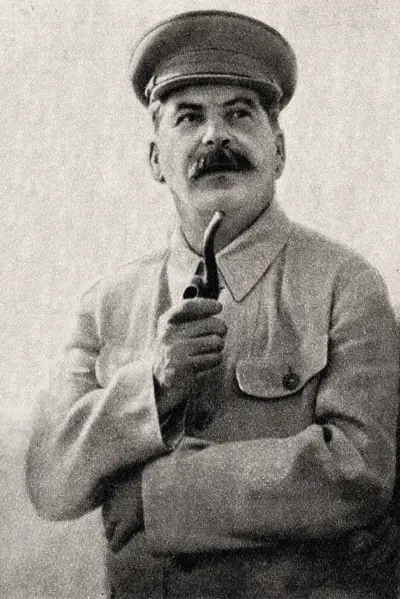
Joseph Vissarionovich Stalin was a Georgian revolutionary and the ruler of the Soviet Union from 1927 until 1953. He served as both General Secretary of the Communist Party of the Soviet Union (1922–1952) and Chairman of the Council of Ministers of the Soviet Union (1941–1953). Despite initially governing the country as part of a collective leadership, he ultimately consolidated power to become the Soviet Union's de facto dictator by the 1930s. A communist ideologically committed to the Leninist interpretation of Marxism, Stalin formalized these ideas as Marxism–Leninism while his own policies are known as Stalinism.
