ROY WILKINS
(Roy Ottoway Wilkins)

In the middle of WWII where Black soldiers were fighting and dying on the war front, there were fears of racists that the Blacks would return and demand full equality and an end to segregation. There were threats in the South of armed attacks against any returning serviceman who would push for desegregation.
In the middle of WWII where Black soldiers were fighting and dying on the war front. Some had an expectation that they would, when they returned, would have their civil rights and an end to discrimination. Southerners did nothing but perpetuate the racist customs and laws of the South and it was not until the 1963 Civil Rights Act that there was to be major change.
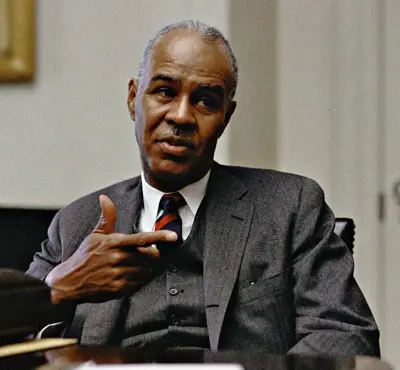
Roy Ottoway Wilkins was a prominent activist in the Civil Rights Movement in the United States from the 1930s to the 1970s. Wilkins' most notable role was his leadership of the National Association for the Advancement of Colored People (NAACP) in which he held the title of Executive Secretary from 1955 to 1963 and Executive Director from 1964 to 1977. Wilkins was a central figure in many notable marches of the civil rights movement. He made valuable contributions in the world of African American literature, and his voice was used to further the efforts in the fight for equality. Wilkins' pursuit of social justice also touched the lives of veterans and active service members, through his awards and recognition of exemplary military personnel.
