Mark Twain Quotes
Your notion and mine about polygamy is without doubt exactly the same; but you probably think we have some cause of quarrel with those people for putting it into their religion, whereas I think the opposite. Considering our complacent cant about this country of ours being the home of liberty of conscience, it seems to me that the attitude of our Congress and people toward the Mormon Church is matter for limitless laughter and derision. The Mormon religion is a religion: the negative vote of all of the rest of the globe could not break down that fact; and so I shall probably always go on thinking that the attitude of our Congress and nation toward it is merely good trivial stuff to make fun of.
There had been vicious discrimination against the Mormons as they migrated from New York State to Utah. Finally, when they reached a place where there were few others to harass them, the condition of the United States government was that they would have to surrender their religious practice of plural marriage. Twain and many others saw a total inconsistency between the monogamy demand and the freedom of religion with separation of church and state.
Mark Twain, Writer, Letter to Miss Kate Field, March 8, 1886
Sourced by: Eigen's Political and Historical Quotations


New Ross was under siege by Cromwell and his English Parliamentarian troops. After two days, the town tried to negotiate terms of surrender and one of the main things they asked for was freedom of religion to practice Roman Catholicism. This famous response set the stage for religious bigotry over the next years. Cromwell’s reasons for not allowing Catholicism to be practiced was not only one of religious zeal. At the time, the Roman Catholic Church was a major geopolitical power under a Pope who commonly supported or even dispatched troops for geopolitical and religious ends. The Vatican was particularly resentful of England for separating from the Church and asserting that the King of England was the head of the Church and not the Pope. Therefore Cromwell and many Englishmen had to deal with the reality that every practicing Catholic in the realm was a potential spy, traitor, and/or rebel. This fear of control of countries by the Pope strongly affected America, and was responsible for the defeat of the first Catholic Presidential Candidate, Al Smith. It was also a major factor in the election of John F. Kennedy so he dealt with it head on.

The Mormon Church at that time allowed plural marriage. Men could have many wives. The Mormons—especially those who had moved to Utah—had organized many civic functions and performed much of the role that local and State governments did elsewhere in the country. The discrimination that Mormons faced in much of the nation was extreme including lynching and other physical attacks. So Mormons banded together in communities and their church became their local government. This together with the plural marriage offended many other Americans. The wall of separation of church and state was collapsing on many fronts with the Mormon Church assuming many governmental functions in Mormon areas and the Federal, State and local governments interfering with the personal and religious activities of the Mormons. This is one of the few occasions in American history where a President publicly criticized a religion in an official function. It took time and patience, but the issues were finally resolved, and discrimination against Mormons is rare, unusual and condemned by all levels of government and most Americans.


Martin wanted William Howard Taft to answer questions about his religious beliefs. Taft was TR’s selection to be his successor. Ironically, a starting with John F. Kennedy, many presidential candidates have been asked about their religious belief’s and have answered whereas Roosevelt would have them not reply to such inquiries.
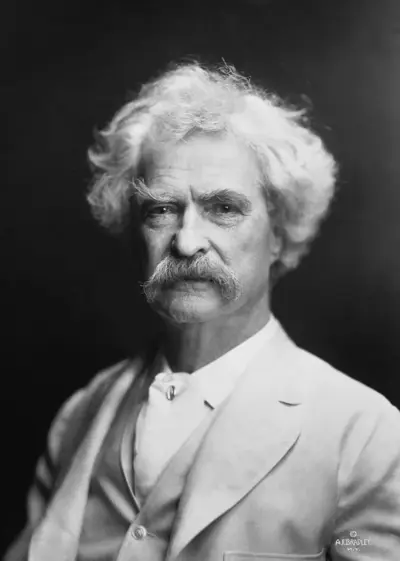
Samuel Langhorne Clemens, known by his pen name Mark Twain, was an American writer, humorist, entrepreneur, publisher, and lecturer. He was lauded as the "greatest humorist the United States has produced," and William Faulkner called him "the father of American literature". His novels include The Adventures of Tom Sawyer (1876) and its sequel, the Adventures of Huckleberry Finn (1884), the latter often called "The Great American Novel".
