George C. Marshall Quotes
You don’t have a staff General, you have a court.
The only soldier ever so honored. MacArthur had a huge ego, and was a shameless self-promoter. However he was never secure enough to have a personal staff of strong independent thinkers the way Dwight Eisenhower and most other high military officers did. The men who stayed on MacArthur’s personal staff tended to be sycophants and toadies and treated him like royalty, hence the remark by General Marshall.
George C. Marshall, 1880-1959, General & U. S. Army Chief of Staff, U. S. Secretary of State, U. S. Secretary of Defense, Nobel Peace Prize Winner Statement to General Douglas MacArthur
Sourced by: Eigen's Political and Historical Quotations


The ruler will be interrogated not only about his own unjust deeds but also about those of his staff
Some otherwise excellent leader, with a misplaced concept of loyalty to their staff, have been greatly harmed by not attending to this principle. Grant’s presidency and legacy was almost totally ruined by the behavior of his subordinates and appointee, with the President unwilling to fire them.

While that is certainly true and has been borne out by history, the same thing can be said of democratic rulers and even many democratic politicians of lower rank. Yes men abound and not politicians not only want them but arguably need them in order to maintain the assurance and positivity that most voters associate with good leadership.


History is replete with instances of military coups. In the final analysis, in every country at all times, there is no force in a society that could cope with a military which decides to act on its own. The Founding Fathers were very conscious of this reality and history, hence the firm civilian control of the military in America.


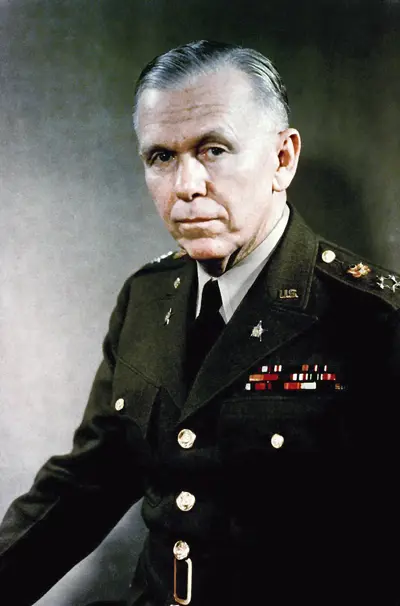
George Catlett Marshall Jr. was an American soldier and statesman. He rose through the United States Army to become Chief of Staff under presidents Franklin D. Roosevelt and Harry S. Truman, then served as Secretary of State and Secretary of Defense under Truman. Winston Churchill lauded Marshall as the "organizer of victory" for his leadership of the Allied victory in World War II. After the war, he spent a frustrating year trying and failing to avoid the impending civil war in China. As Secretary of State, Marshall advocated a U.S. economic and political commitment to post-war European recovery, including the Marshall Plan that bore his name. In recognition of this work, he was awarded the Nobel Peace Prize in 1953.
