John G. Heimann Quotes
You can't keep fraud out of the system. The key to good regulation is how quickly you catch it.
John G. Heimann, U. S. Controller of the Currency, New York State Bank Superintendent, Quoted in New York Times, September 15, 1991
Sourced by: Eigen's Political and Historical Quotations


Theodore Roosevelt had made many changes to control corporate rapaciousness and disregard for the law. Taft, his handpicked successor, wanted to roll back some of the regulations feeling that the problem of corporate corruption and venality had been solved. TR did not agree and the men’s close friendship dissolved over this issue—so much so that Roosevelt ran against Taft in the 1912 election.

Commenting on the 1989 savings and loan scandal:

At the time of this interview there had been a decade of business fraud at many different levels. The regulatory agencies supposedly responsible for the regulation had neither the staff or the political will to even enforce the laws and regulations then in existence and there were many loopholes in those. Many business interests opposed all regulation and strict enforcement as a diminution of the health of the economy. Others, like Greenspan, saw fraud as corrupting the markets themselves and therefore the usual capitalistic economic competitive forces that would control business do not operate with extensive fraud.


He was referring to Fannie Mae, the government-created. private mortage guarantee company. It was heavily regulated, and in general it met the regulatory requirements. However, the requirements were insufficient, and in the 2008 Meltdown and the Great Recession that followed, Fannie Mae itself was in such bad financial condition, that the Federal Government had bail them out or have the entire home mortgage industry fall apart.
Modern finance is so complex and convoluted, that any laws or regulations that government makes are quickly evaded by even more complex and convoluted schemes which the legislators and regulators have to try and control. By the time they learn and understand and finally develop measures to regulate those, the cycle starts again. Hence the “fool’s errand”

Marcopolos had discovered the Bernie Madoff Ponzi Scheme Fraud 9 years before the government discovered the largest consumer fraud ($68 billion) in American financial history. He repeatedly sent warnings and explanations to the SEC investigators, most of which turned out to be exactly right. They ignored all of it I an era of deregulation, and never even investigated Madoff to see if there might be anything amiss.

This was a very important quotation because Cox was a strong advocate of deregulation and voluntary regulation, and that is why he was appointed to head the SEC by George W. Bush. He was the leading Republican expert on Regulation of the Stock Markets and sale of public securities. However when the Meltdown of 2008 hit, it was clear to all but the extreme ideologues that some Federal regulation was necessary. Nonetheless, it took several years to reform the regulations for the financial industry with the Banks and Wall Street fighting it all the way and by that time the Republican Party had been so dominated by ideological conservatives that the views of Cox and others no longer had much influence. They fought the Dodd-Frank reforms to go preserve self regulation to a great extent.
Greenspan accepted this as many other economists and financial regulators did. What they did not take into account was the incredible greed of many of the financial executive who were betting with their customers money, If the bet was right they, the shareholders and the customers all made out very well as they were highly leveraged. If the bet was wrong, the shareholders and customers lost a lot, and the financial executives only made their multimillion dollar salaries and bonuses (Many were actually were guaranteed their bonuses even if they put the company into bankruptcy.) Worse, they earned their money when they made their sales or earnings targets, but when the securities they bought went sour, even if the company had no funds left, the. It was “heads we all win and tails only I win.” The vested interests between the financial company executives, the shareholders, and the clients were divergent, and the customer was at the bottom of the money pole.

He was speaking for the Bush Administration. He was another regulation-opposed appointee of the George W. Bush Administration. He killed many regulations that had been developed to better regulate the banks and the mortgage industry to stop many of the obvious abuses of the industry. With few regulations in place, despite warnings such as {638024}, what had been greedy and dangerous practices of a minority of the industry became the vast majority when the bubble burst in the Meltdown. Note the rhetorical device of using “regulatory intrusion” rather than “regulation” or “more regulation”. This reflected an extreme conservative view that all regulation is bad – an “intrusion”, while most conservatives want a reasonable degree of regulation and not the elimination of all regulation.

At this time it was 6 years after the Home Financing Crisis and the Meltdown of 2008 and despite tens of thousands of law violations by the bank, the Justice Department was finally finishing their investigations and requiring some penalties. Other negotiations with other banks were in progress, but no bank executives were going to jail for the millions they handled fraudulently, whereas a burglar who stole household goods would do jail time.

Conversations about pollution and environmental safety

Banks often lie. The system encourages them to do so. In a crisis, if a bank honestly says that it is not sure that it has enough cash and other liquid assets, others will not lend it any more money and depositors will rush to withdraw their money, thereby almost insuring a failure. The bank that lies, might weather the storm and survive.


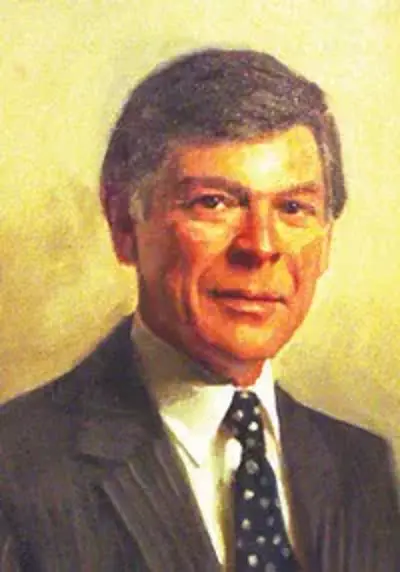
John G. Heimann was Comptroller of the Currency from 1977 to 1981 having been appointed by President Jimmy Carter and confirmed by the Senate.
