Zbigniew Brzezinski Quotes
Without Ukraine, Russia's imperial aspirations are essentially nostalgia, but it's not a real policy.
Brzezinski, Zbigniew. Interview by Fareed Zakaria. Fareed Zakaria GPS, CNN, 2014.


A few months later, that is exactly what Germany did. She was hoping that England would not enter the war despite her treaty obligations, but she was willing to risk the possibility. The Czar had a strong espionage and intelligence service active in Germany, but, like so many other intelligence failures, the intelligence operatives and analysts had military and economic facts but had little understanding of the German culture which propelled Germany to what to most other cultures was “irrational policy making.” People and nations often engage in irrational activities, even against their own self-interest.

This was his major justification for occupying and annexing the Crimea. He had a good historical point. The Crimea had been a part of Russia for centuries, and many Russians had died defending it over the years. At the high pont of the strength of the Soviet Union, the Soviet leadership reorganzied the "states" of the nation and placed the Crimea in the State of Ukraine -- which they also considered part of Russia and from where the great Russian hero, Alexander Nevsky came and unified Russia. When the Soviet Union broke up, Ukraine became an independent coutry and assumed Crimea belonged to it, based in the last administrative reorganization of the area before the break-up. However, most of the commerce in Crimea was with Russia proper and not Ukraine. And the Crimeans were mostly ethnic Russians or Taters--a minority who had no historical or cultural ties to Ukraine. Neither group spoke Ukrainian much. 90 percent of the Crimeans wanted to Remain with Russia and not be part of Ukraine. This was the main reason that the Russians were so easily able to send armed soldiers in civillian dress into Crimea to size the territory--the vast majority of the indigineous Crimean poluation wanted them there and strongly favored annexation claiming that they had the right as American President Woodrow Wilson put it to "self determination". Bit Ukraine would hot allow a formal plebicite. So Russia sized Crimea, had the plebicite, and based on the results and the desires of Putin and the Russian leadership, annexed Crimea.

During the Cold War and afterwards many Americans attributed the problems we were having with the Soviet Union emenated from the fact that they were Communists, and our focus was anti-communism. Kennen, however argued that it was not Communism that was the cause of the Aggression of the Soviet Union. It was an extension of the Russian Culture. After the Soviet Union collapsed, and Communism was rejected by the Russians, we still had a great deal of Russian aggression and Foreign Policy problems with Russia. Kennan was right. It was the Russian culture, history, values and traditions that were the primary cause of most of the problems with Russia.


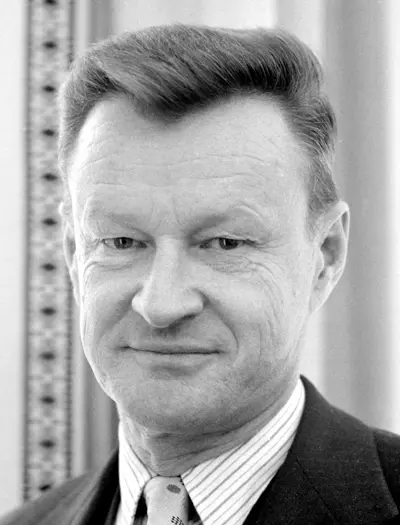
Zbigniew Kazimierz Brzezinski was a Polish-American diplomat and political scientist. He served as a counselor to President Lyndon B. Johnson from 1966 to 1968 and was President Jimmy Carter's National Security Advisor from 1977 to 1981. As a scholar, Brzezinski belonged to the realist school of international relations, standing in the geopolitical tradition of Halford Mackinder and Nicholas J. Spykman. Brzezinski was the primary organizer of The Trilateral Commission.
