Charles Gardner Geyh Quotes
With the Evangelical Right, compromise is not possible on the issues of conflict. In former times of clashes with courts compromise has taken place.
It is hard to compromise on a position where advocates believe they are following God’s commandment. To compromise is to abandon God and morality. Issues like abortion, gay marriage, and prayer in public activities are examples of issues of seeming intractable resolution.
Charles Gardner Geyh, Legal Council to the House of Representatives Judiciary Committee, Lecture, September 17, 2006
Sourced by: Eigen's Political and Historical Quotations

The then current example was with same sex marriage. Some people who claimed that their religion declared same sex marriage as a sin and prohibited their aiding and abetting that activity. As a result, they claimed that their right of religious freedom allowed a county clerk to refuse to issue the marriage license or a hotel to refuse to allow a gay couple to rent their facility for a wedding, or a retail store to refuse to sell the couple bedding.


Liberty University was a Christian Evangelical school that was controlled by conservative Republican figures, and unlike regular universities was not bipartisan. This quotation is significant because all secular universities and the vast majority of religious universities have been non-partisan and allowed political interest clubs for all political parties. Liberty university was an example of a new role for religion and religious universities—identifying with one political party and prohibiting its students from campus activities of the other major party.


While Perez describes the situation accurately, he does not mention here that there is a minority of fundamentalist Jewish Israelis, and they too do not make compromises easily. Nor do the Christian fundamentalists in the United States. All say, “How do you compromise with the will of God.”


What was particularly unusual about this quote was that Cronkite had always been so circumspect about his own political views and opinions and rarely expressed personal criticism of any group or movement. When he was the national anchor for CBS News, he was so non partisan that he became the “most trusted man in America.” By 2007 however, most of the radical religious right had organized a serious movement which unlike other self interest groups which wanted to expand their rights or benefits, much of the radical religious right strove to curtail the rights of other Americans who differed from them as to religious interpretation, concepts and role of government, sound family structure and relationships, gender equality, sex, and personal freedom.


Responding to criticisms by Rev. Jerry Falwell about America's moral decline: See also, Mark Russell


The argument over whether or not the Founding Fathers intended a religious—Christian—foundation in the formation of America is not just a debate of modern times, but has been debated even in the next generation of politicians. Webster, believed that it was.


This quotation is sometimes used to show that Washington thought religion important. Most of the founding fathers thought religion both important and potentially dangerous. They had observed Europe tear itself apart over religious differences. Note that Washington uses the words “religious principles” as opposed to “religion” or “religious prescriptions” or “religious doctrine.” The founders were not hostile to the concept of religion—even Jefferson and Franklin saw potential values in religion and religious institutions. They were hostile, however, to letting any particular sect dominate the religious environment of the nation. Nor did they want any of the religions controlling or operating the civil government. See {625616}.


There are many democracies that have run into this problem at many times. Even the United States had situations like this. The Adams-Jefferson Presidential Contest caused President Adams to curtail civil rights so he could not be as viciously attacked. The polarization after the first Black was elected president in 2008 was another period of destructive contention and polarization.

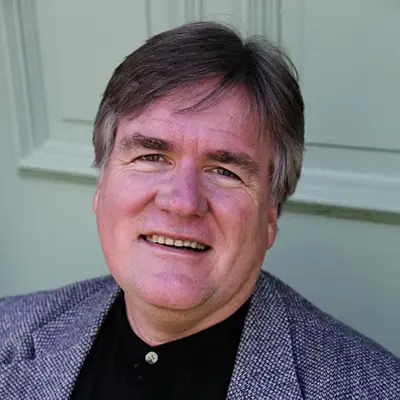
Charles Gardner Geyh is the John F. Kimberling Professor of Law at the Indiana University Maurer School of Law in Bloomington, Indiana. His research centers on judicial conduct, ethics, procedure, independence, and administration, and he has testified as an expert in several cases involving judicial impeachment. In addition, he is quoted frequently in the national media for his expertise in judicial misconduct, conflicts of interest, and the separation of powers.
