Lucretius Quotes
Why shed tears that you must die? For if your past life has been one of enjoyment, and if all your pleasures have not passed through your mind, as through a sieve, and vanished, leaving not a rack behind, why then do you not, like a thankful guest, rise cheerfully from life's feast, and with a quiet mind go take your rest.
Lucretius. On the Nature of Things. Translated by J. S. Watson, Henry G. Bohn, 1851.


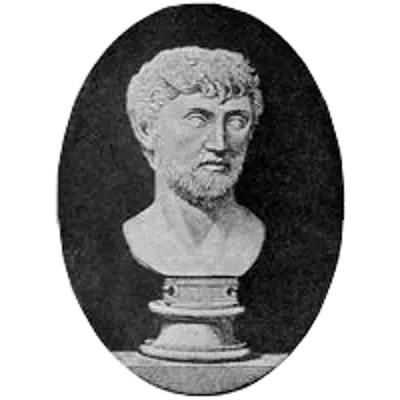
Titus Lucretius Carus (/ˈtaɪtəs luːˈkriːʃəs/ TY-təs loo-KREE-shəs, Latin: [ˈtɪtʊs lʊˈkreːtɪ.ʊs ˈkaːrʊs]; c. 99 – c. 55 BC) was a Roman poet and philosopher. His only known work is the philosophical poem De rerum natura, a didactic work about the tenets and philosophy of Epicureanism, and which usually is translated into English as On the Nature of Things. Lucretius has been credited with originating the concept of the three-age system that was formalised in 1836 by C. J. Thomsen.
