Niccolo Machiavelli Quotes
Whoever conquers a free town and does not demolish it commits a great error and may expect to be ruined himself.
Machiavelli, Niccolò. The Prince. Translated by W. K. Marriott, J. M. Dent & Sons, 1908, p. 43.


Ironically, when he attacked Athens in 480 BC, the Athenians under Themistocles, abandoned the city—see {612656}—and lured the overly-confident Xerxes into a sea battle at Salamis where the Persians were totally destroyed. A few public buildings of Athens were burned, but before Xerxes could fulfill his vow, he was defeated and had to retreat to Persia.


Paine was describing the conquest of England in 1066 by William the Conqueror.


The phrase “put them under contribution” was a practice of making a town pay for the costs of the British military effort in the area. To some, this was blackmail and extortion, pay cash or get destroyed. The Prime Minister thought that the American public sentiment at the time would not be intimidated to pay in a significant number of towns or cities.


William V, Prince of Orange, was in a very precarious position and might be deposed. Officially Harris and the British were supporting him and Harris was giving him money to firm up his regime, but their great fear was that the French would support and control the Patriot Revolutionary movement, then quite active. And William was very tentative in dealing with the growing Patriot revolutionary movement. Actually, to cover all eventualities, Harris was secretly aiding the Patriots as well. See {639752}.


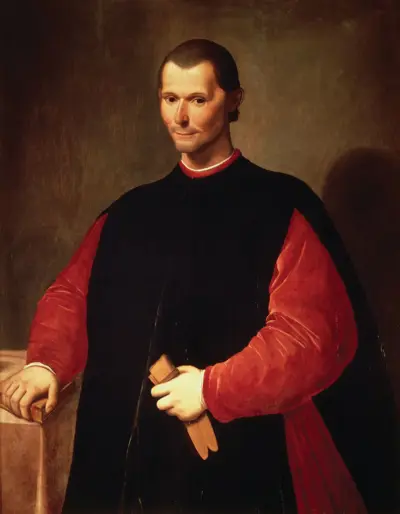
Niccolò di Bernardo dei Machiavelli was an Italian Renaissance diplomat, philosopher and writer, best known for The Prince (Il Principe), written in 1513. He has often been called the father of modern political philosophy and political science.
