Socrates Quotes
Where there is reverence there is fear, but there is not reverence everywhere that there is fear, because fear presumably has a wider extension than reverence.
Plato. The Dialogues of Plato. Translated by Benjamin Jowett, vol. 2, Clarendon Press, 1892, p. 84.


See Franklin Delano Roosevelt {636844} and Henry David Thoreau {35833} for similar later statements.


The President later addressed this in his "We have nothing to fear but fear itself" speech – See {636844}.


See Thoreau {623573} and FDR {636844} for similar sentiments.

This is the principle that the terrorist lives by—to inculcate fear of danger in as many people as possible,


The fear of nuclear war was a major emotion for most people in the world at the time. Hard liners like Goldwater were concerned that that fear would undermine support for greater nuclear development and deployment in America and maintaining opposition to nuclear test ban treaties that were under discussion. He made the mistake however of referring to the fear as “craven”, morally denigrating any American who might be in fear of nuclear war, which included just about everyone. So the Democrats took this quotation and used it in their battery of TV ads showing Goldwater as not only a hard liner, but one who had no empathy or understanding for a normal person who feared a nuclear conflict—one who was not to be trusted with the Presidency. Had Goldwater simply argued that legitimate and reasonable fear of nuclear conflict might make the nation too timid and perhaps inadvertently increase the likelihood of nuclear disaster by not standing up to the Russians, he may not have had the resentment from most people who thought Goldwater was calling their fears “craven”.

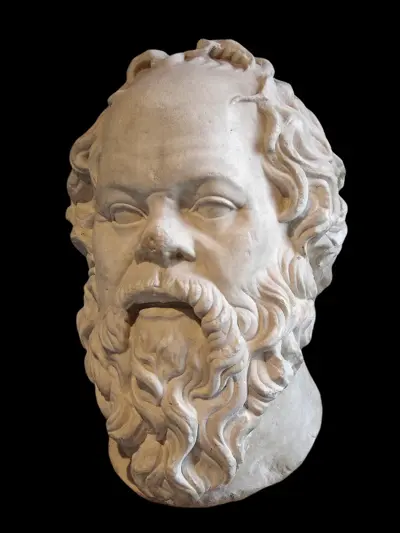
Socrates (/ˈsɒkrətiːz/; Ancient Greek: Σωκράτης Sōkrátēs [sɔːkrátɛːs]; c. 470 – 399 BC) was a Greek philosopher from Athens who is credited as one of the founders of Western philosophy, and as being the first moral philosopher of the Western ethical tradition of thought. An enigmatic figure, he authored no texts, and is known chiefly through the accounts of classical writers composing after his lifetime, particularly his students Plato and Xenophon. Other sources include the contemporaneous Antisthenes, Aristippus, and Aeschines of Sphettos. Aristophanes, a playwright, is the main contemporary author to have written plays mentioning Socrates during Socrates' lifetime, although a fragment of Ion of Chios' Travel Journal provides important information about Socrates' youth.
