George Orwell Quotes
When the white man turns tyrant [colonialism], it is his own freedom he destroys.
George Orwell, 1903-1950, Pen-name of English Writer Eric Blair, Shooting an Elephant, 1931
Sourced by: Eigen's Political and Historical Quotations


Some Indians were engaged in a massive program of non-violent passive resistance, but were brutally beaten. Even the Viceroy was outraged. The quotation illustrates the limited power that even the Viceroy of India had as there was a bureaucratic, decentralized government in each state of India which reported to its own administrators and legislatures.


Barre, who had served as an officer in North American fighting with the Americans against the French, was a major opponent of the Stamp Act and other efforts to tax the American colonies. In the debate one of his opponents referred the American colonies as “planted by the care of England” and “nourished” by the mother country’s care. Barre was imprisoned in the Tower of London for a while for his vigorous defense of the American colonists.

This quotation so impressed Thomas Jefferson that he wrote it in his Commonplace Book.


There was continuing tension between England, the Colonial Governors of South Africa and the Boers. Immigrant settlers to South Africa from Holland. The Boers were very uneducated and not steeped in democratic government. They wanted to enslave and sieze the land of the Black residents. Under English law, the Blacks were also English subjects. The Boers insisted that any interference in their persecution and enslavery of the Blacks was oppression just as the Southern American Whites saw Reconstruction defense of the Blacks as oppression to them. The classic question is: “Is it oppression to stop people from opressiong others?”

The “We” to which he was referring were the British officials and civil servants who governed all of India as a colony of the British Empire.


He was expelled from Parliament for such.

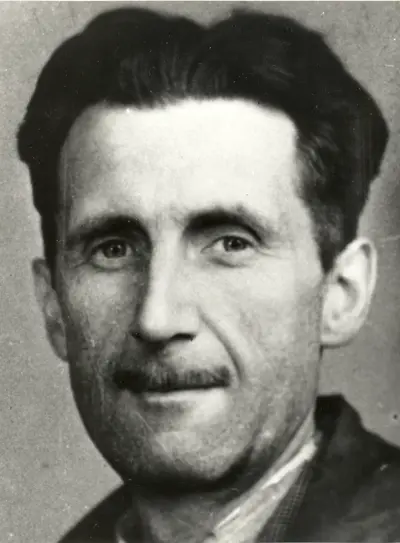
Eric Arthur Blair, known by his pen name George Orwell, was an English novelist, essayist, journalist and critic. His work is characterised by lucid prose, biting social criticism, opposition to totalitarianism, and outspoken support of democratic socialism.
