Dana Priest Quotes
When the Transportation Security Administration adopted body scanners at airports, activists wrote the Fourth Amendment on their underwear in metallic paint readable by the new devices.
Priest, Dana, and William M. Arkin. Top Secret America: The Rise of the New American Security State. Little, Brown and Company, 2011.


In England there was an eye on American McCarthyism and its excesses.


He was then a Senator. When he became Attorney General he not only greatly increased the amount of surveillance that was done be the Federal government, but he also asked for huge increases in government authority to read mail and conduct surveillance—increases that he had opposed when he was a Senator.


See {635177} for the event that triggered the statement.

Snowden, was a contract worker for Booz Allan assigned to the National Security Agency (NSA). He felt that some of the NSA activities were illegal and unethical and tried to complain to NSA officials who rebuffed him. Despite the fact that he had signed an agreement not to do so, he copied many critical, classified documents that exposed much of the NSA activities that the NSA officials had denied existed—including lying under oath to the Senate. He then made many of them public, violating his oath, breaking the law, and opening up an entire area of government spying which most Americans knew nothing about and about which senior government officials had lied under oath to Congress. They of course wanted to prosecute Snowden who had told the truth, while they had lied. For many Americans, this became a moral and ethical conundrum.

Many politicians were arguing that giving the intelligence agencies more power to wiretap, bug and hack into personal communications despite the 4th Amendment’s strictures argued that the public was in rational fear of terror attacks and had a right to be protected.


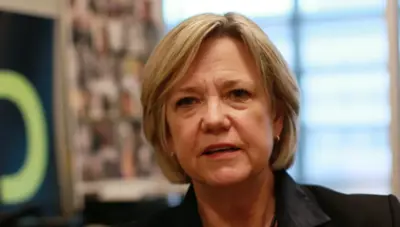
Dana Louise Priest is an American journalist, writer and teacher. She has worked for nearly 30 years for the Washington Post and became the third John S. and James L. Knight Chair in Public Affairs Journalism at the University of Maryland's Philip Merrill College of Journalism in 2014. Before becoming a full-time investigative reporter at the Post, Priest specialized in intelligence reporting and wrote many articles on the U.S. "War on terror" and was the newspaper's Pentagon correspondent. In 2006 she won the Pulitzer Prize for Beat Reporting citing "her persistent, painstaking reports on secret "black site" prisons and other controversial features of the government's counter-terrorism campaign." The Washington Post won the 2008 Pulitzer Prize for Public Service, citing the work of reporters Priest and Anne Hull and photographer Michel du Cille "exposing mistreatment of wounded veterans at Walter Reed Hospital, evoking a national outcry and producing reforms by federal officials."
