Stephen Jay Gould Quotes
When scientists need to explain difficult points of theory, illustration by hypothetical example - rather than by total abstraction - works well (perhaps indispensably) as a rhetorical device. Such cases do not function as speculations in the pejorative sense - as silly stories that provide insight into complex mechanisms - but rather as idealized illustrations to exemplify a difficult point of theory. (Other fields, like philosophy and the law, use such conjectural cases as a standard device.
Gould, Stephen Jay. Leonardo's Mountain of Clams and the Diet of Worms: Essays on Natural History. Harmony Books, 1998, p. 301.


This is a famous line from a longer passage which has historical significance. See {633904}.

Joseph ben Matthias. He was referring to the Jewish influence in Science, Medicine, Law, and Philosophy


He was referring to the historical and traditional American political argument of whether the country should be more or less multicultural. There have, even before the founding of the country, this people who favored not only new people from new cultures and nations, but adopting new and foreign ideas. At the same time, there were those who wanted the American culture to not be corrupted of even changed significantly by large number of new people or those new people reaching positions of influence or power. They also often opposed foreign ideas from certain religions to foreign science; from foreign law to foreign philosophy. This interview was just after the Donald Trump Presidential victory.


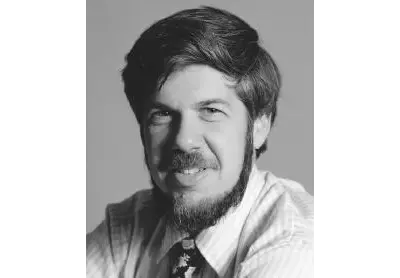
Stephen Jay Gould was an American paleontologist, evolutionary biologist, and historian of science. He was one of the most influential and widely read authors of popular science of his generation. Gould spent most of his career teaching at Harvard University and working at the American Museum of Natural History in New York. In 1996, Gould was hired as the Vincent Astor Visiting Research Professor of Biology at New York University, where he divided his time teaching there and at Harvard.
