David Souter Quotes
When Congress exercises the powers delegated to it by the Constitution, it may impose affirmative obligations on executive and judicial officers of state and local governments as well as ordinary citizens.


This is the opinion that established the supremacy of the Supreme Court over state courts in Constitutional matters. There was an alternative view then that states were sovereign entities and their courts decisions could not be reviewed or overridden by the Federal courts. This case settled that issue,
Marshall is famous for, as Chief Justice, establishing the principle that the Judiciary can override Congress and the Executive in determining Constitutionality. However, as this quotation illustrates this principle had been discussed in open debate on the ratification of the Constitution. It was not simply a grab for power by a Chief justice; he uttered this quotation long before he ever suspected he would be a judge but actually spent much of his career in the executive and legislative branch of government.

Soon after Jackson's reelection, delegates from South Carolina, led by John C. Calhoun, moved quickly to declare "null, void, and no law" the Tariff Act of 1832. The president's reaction to the Ordinance of Nullification was swift.


This is a classic type of fallacious political logic. The author claims that there are no powers in the constitution to make laws in a number of important areas of our society. What is true, is that there is no explicitly and uniquely specified statements in the Constitution regarding the areas he specified (and some he didn’t like education). However the power to make laws in these areas comes from the “Commerce Clause” where the Federal Government was given the power to regulate Interstate Commerce. And that is what the Federal Government does make laws about. Food that is sold in the state where it is grown is regulated by the states. But interstate agriculture is. Medicines and weapons are also sold and transported in interstate commerce. Even housing is in part covered as financing and mortgages, building materials, working conditions of the building companies are part of Interstate Commerce. A succession of Congresses have recognized this and so has every Supreme Court in our history. McManus however believes that all these legislators and judges have been wrong and worse, part of a conspiracy to subvert the Constitution. See {630683} for his tendency to see conspiracies in politics.

Senators have throughout our history used their power of treaty ratification to encroach on the executive branch and participate in the actual negotiations of treaties. President’s like McKinley to avoid non ratification actually appointed 3 senators to his 5 man treaty negotiating team. The 2/3 super majority is a high hurdle for ratification and presidents have always tilted with the Senate on treaties.

She was always an American optimist. Most of the Southern States did everything possible to try and defy the Supreme Court’s decisions on school segregation and other matters regarding their “traditional rights” to discriminate racially. Entire public school systems closed rather than desegregate. The Civil Rights Act and Voting Rights Act in 1964 made it much more difficult, But change took place inexorably over the next years as the older generation gave way to the new—one that was more educated and better informed as a result of television. Mississippi had more Black elected public officials than white. By the 21st century, there were relatively few areas where the Southern States still tried to evade the Supreme Court.

President John Adams Alien and Sedition Acts were amongst the worst laws ever passed in America. It totally violated the First Amendment but at the time the Supreme Court had not ruled on the laws which prohibited criticizing the government. Ironically, it was Adams’s son, John Quincy Adams who finally led the repeal effort.


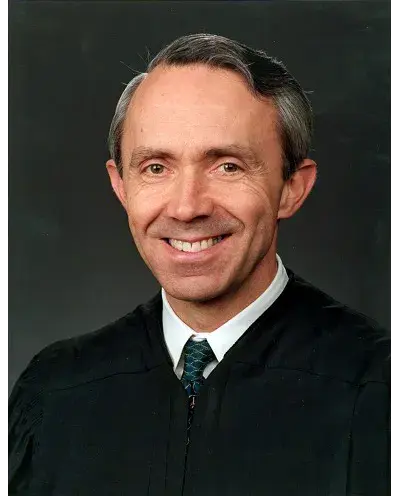
David Hackett Souter is a retired Associate Justice of the Supreme Court of the United States. He served from October 1990 to his retirement in June 2009. Appointed by US President George H. W. Bush to fill the seat that had been vacated by William J. Brennan Jr., Souter sat on both the Rehnquist and the Roberts Courts.
