William O. Douglas Quotes
When a legislature undertakes to proscribe the exercise of a citizen's constitutional right to free speech, it acts lawlessly; and the citizen can take matters into his own hands and proceed on the basis that such a law is no law at all.
Douglas, William O. Dissenting opinion. Poulos v. New Hampshire, 345 U.S. 395, Supreme Court of the US, 27 Apr. 1953, p. 423.

The Nazis were banned from demonstrating in the streets of Skokie, Illinois on the grounds that they would incite violence. However, Goldberger of the ACLU took their case and won their right to spew their hatred before the Supreme Court.


In the English system the checks and balances of the American system are not present. Historically in England the Monarch and the Parliament acted as checks upon each other. With a Constitutional Monarch there is no institutional check on Parliament. The checks are their restraint--respect for precedent--and the voters. The Prime Minister is a member of Parliament and has no powers other than what Parliament gives him/her. The courts in England are under Parliament and the upper house, the House of Lords is the equivalent of the highest court—but it may always be overruled by the parliament itself.

Actually it was Thomas Jefferson who had drafted most of the language. This attack was aimed at President John Adams, the big supporter of the unpopular Alien and Sedition laws, and the man Jefferson was intent on unseating at the end of his first term. He did and destroyed the Federalist Party in the process.


Stopping the FCC from challenging broadcast licenses for programming-related deficiencies:

In 1836 the House of Representatives adopted the so-called "Gag Rule" whereby the house could not act on all further petitions regarding slavery, even though thousands of petitions were being received. Adams was one of the few who protested the Gag Rule:. Adams even submitted petitions with which he did not agree:. Every year Adams attempted to get the Gag Rule repealed. He was even threatened with censure for his efforts, but his status as an ex-president protected him. Finally, in 1844, Adams' perennial resolution carried:


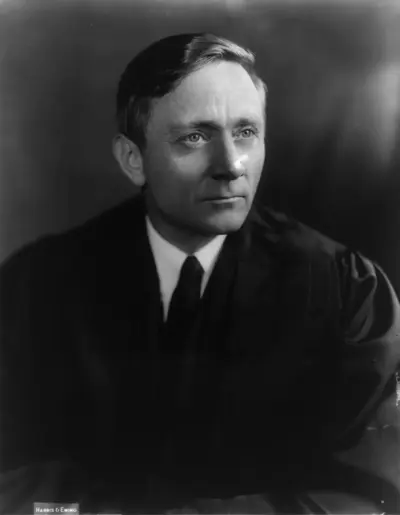
William Orville Douglas was an American jurist and politician who served as an associate justice of the Supreme Court of the United States. Nominated by President Franklin D. Roosevelt, Douglas was confirmed at the age of 40, one of the youngest justices appointed to the court. His term, lasting 36 years and 211 days (1939–75), is the longest in the history of the Supreme Court. In 1975, Time magazine called Douglas "the most doctrinaire and committed civil libertarian ever to sit on the court."
