Barbara Ehrenreich Quotes
What we need is a tough new kind of feminism with no illusions. Women do not change institutions simply by assimilating into them. We need a feminism that teaches a woman to say no - not just to the date rapist or overly insistent boyfriend but, when necessary, to the military or corporate hierarchy within which she finds herself. We need a kind of feminism that aims not just to assimilate into the institutions that men have created over the centuries, but to infiltrate and subvert them.
Ehrenreich, Barbara. "A Uterus Is Not a Substitute for a Conscience." Los Angeles Times, 23 May 2004.


participating in the First World War This was not just a WWII happening. The process rally started in WWI.

The Bible and the Church have been the greatest stumbling blocks in the way of women’s emancipation.
The most important documents and doctrine of most churches were created by men who also established the framework of the religion. The result has in almost all cases been a sexist structure with women having not only little power not typically females are banned from all church governance. See {640303} for her quote on religion in general vis a vis women.


This phase of American feminism was beginning but even he had no idea of how fast it would be propelled as a result of the Second World War which would begin at the end of that year.


The phrase “Our aim is to suppress men as a class” is often quoted out of context by opponents of feminism. Her concept is much more subtle of course.

Ingersoll was considered to be the greatest orator and political thinker of his day, but his overt atheistic views curtailed his elected political career.


The Organization's Periodical. The statement was repeated several times in variation between 1890 and 1920. This organization was the national leader of similar organizations in over 20 States. Many notables were involved including Louis D. Brandeis, Francis Parkman and John Lowell.
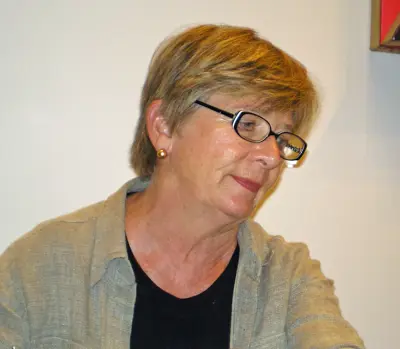
Barbara Ehrenreich is an American author and political activist who describes herself as "a myth buster by trade" and has been called "a veteran muckraker" by The New Yorker. During the 1980s and early 1990s she was a prominent figure in the Democratic Socialists of America. She is a widely read and award-winning columnist and essayist, and author of 21 books. Ehrenreich is perhaps best known for her 2001 book Nickel and Dimed: On (Not) Getting By in America. A memoir of Ehrenreich's three-month experiment surviving on minimum wage as a waitress, hotel maid, house cleaner, nursing-home aide, and Wal-Mart clerk, it was described by Newsweek magazine as "jarring" and "full of riveting grit," and by The New Yorker as an "exposé" putting "human flesh on the bones of such abstractions as 'living wage' and 'affordable housing'." She is a recipient of a Lannan Literary Award.
