Adam Smith Quotes
What is prudence in the conduct of every private family, can scarcely be folly in that of a great kingdom.
Adam Smith, 1723-1790, Scottish Political Economist, The Wealth of Nations, 1776
Sourced by: Eigen's Political and Historical Quotations


After the Stock Market crash of 1929, Republican politicians promised "recovery is right around the corner." But La Guardia disagreed:


At the time, many conservatives were threatening not to increase the debt ceiling unless they could get their way on the budget negotiations which would come up later. The Congress had earlier actually committed to spend the amounts when they voted the appropriations that enabled the spending and increasing the debt. Most countries do not have this second stage in that there is nothing the Congress can possibly do to change get back the money that they already voted to be spent, and the process of raising the debt ceiling must be done else the “full faith and credit” of the United States.

_0_thumbnail_47x47.jpg "Bill White, Mayor of Houston, Texas")


By the time the debt ceiling needs a Congressional vote, the money has already been obligated and spent. That is when Congress can control spending. The debt ceiling is ALWAYS increased by Congress when asked otherwise the U. S. would not be able to pay its bills. However, many members of Congress like the fact that every year or so the administration needs their votes so they can extract benefits for their constituents more easily with that leverage.

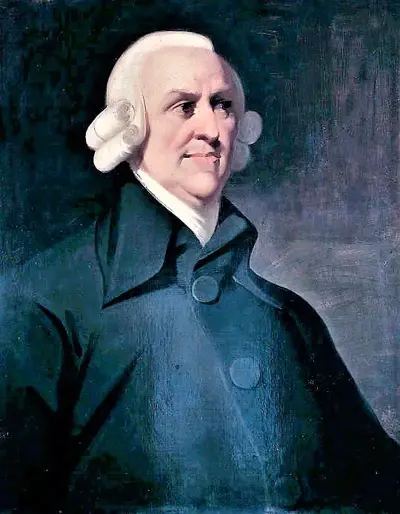
Adam Smith FRSA was a Scottish economist, philosopher as well as a moral philosopher, a pioneer of political economy, and a key figure during the Scottish Enlightenment, also known as ''The Father of Economics'' or ''The Father of Capitalism''. Smith wrote two classic works, The Theory of Moral Sentiments (1759) and An Inquiry into the Nature and Causes of the Wealth of Nations (1776). The latter, often abbreviated as The Wealth of Nations, is considered his magnum opus and the first modern work of economics. In his work, Adam Smith introduced his theory of absolute advantage.
