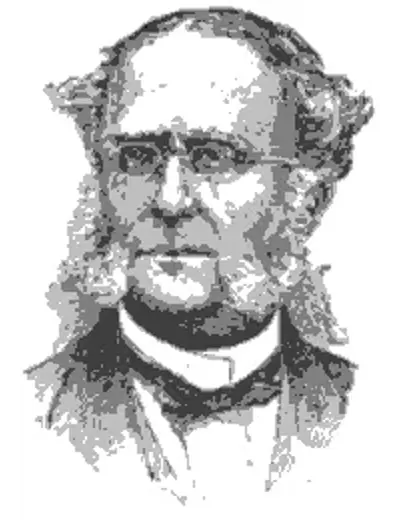
Edmund Quincy Quotes
What has the North to do with slavery? What have we to do with it, indeed! when it encircles us like the air we breathe -- as invisible but as ever near us -- when it makes our laws, controls our interests, appoints our rulers, sets a price upon our heads, demands the sacrifice of our free utterance, disfranchises in one half the States the citizens when the Constitution has made free every where--when it makes Religion its pander, and the Church its sanctuary!
Edmund Quincy, 1808-1877, Abolitionist, Historian & Editor, Son of Josiah Quincy, Letter to William Ellery Channing, Dedham, April 12, 1840
Sourced by: Eigen's Political and Historical Quotations


As a key member of Lincoln’s cabinet, William H. Seward was most concerned with preserving The Union. However, since the Constitution was written in 1787, there had been compromises made with the pro slavery forces of the South to give them proportionally more political power and to avoid interfering with the institution of slavery. The Dred Scott Supreme Court decision forced the Northern States to actively cooperate in enforcing and maintaining slavery. Large numbers of abolitionists had reached their limit and wanted no more compromises regarding slavery. Mrs. Seward was one of those. This quotation also illustrates the influence that some women had in politics even though women could not vote. Frances Seward was very much a political partner with her husband who was favored to beat Lincoln for the Republican Presidential nomination.


Manava Dharma Shastra. This text is a part of the Hindu Holy Texts. Hindus believe that Manu was a prophet whose text is revealed or inspired.


The Mystery was for many years the only Black Newspaper in America.

The country had been completely polarized by 1854. It was only a matter of time for something like the Civil War to break out. The impossibility of compromise was not just held by radicals like Garrison but after the Compromise of 1850 fell apart, most politicians on both sides s

The political machine of New York City, unlike most others in the Northeast were supporters of the Southern position on slavery. They had strong economic relations with the Southern planters and wanted to keep the federal government far away from state and local affairs.


Brown was the richest man in Rhode Island and made much of his money in the slave trade. This quotation shows that slavery was not completely a North verses South split. Northerners like Brown for whose family Brown University was named, was as virulent supporter of slavery as the most ardent Southerner.