Donald Judd Quotes
Well, its very exasperating when you can't get it right.
Judd, Donald. Interview with Dorothy Seckler. Oral History Interview with Donald Judd. Archives of American Art, Smithsonian Institution, 15 Apr. 1965.


After being surrounded by the Germans for seven days at what would later be called the Battle of the Bulge, a German officer notified the Americans that they would accept their surrender. McAuliffe’s one word response summed up the resolve of the Americans who were surrounded. The Americans managed to hold the line and defeat the German’s last major offensive of World War II.

This began after the White House daily press briefings started to be televised. Many reporters do not want their network or station to broadcast the question and answer where another reporter asked the question. So he or she asks the same question and uses that video on their news broadcast where the public is not only provided with the question and answer, but is reminded of how the reporter is doing his/her job. It would be easy for the Press Secretary to refuse to answer a question that has already been asked and answered, but most press secretaries understand the dynamics of modern journalism and go along with the repetition to help the reporters out.


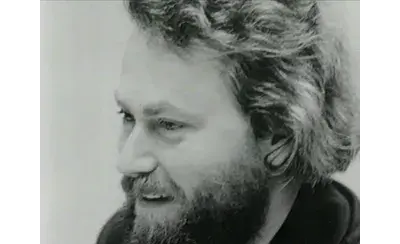
Donald Clarence Judd was an American artist associated with minimalism (a term he nonetheless stridently disavowed). In his work, Judd sought autonomy and clarity for the constructed object and the space created by it, ultimately achieving a rigorously democratic presentation without compositional hierarchy. Nevertheless, he is generally considered the leading international exponent of "minimalism," and its most important theoretician through such seminal writings as "Specific Objects" (1964). Judd voices his unorthodox perception of minimalism in Arts Yearbook 8, where he asserts; "The new three dimensional work doesn't constitute a movement, school, or style. The common aspects are too general and too little common to define a movement. The differences are greater than the similarities."
