Oliver Goldsmith Quotes
Wealth accumulates, and men decay.
Goldsmith, Oliver. The Deserted Village. W. Griffin, 1770, p. 3.


It is interesting to compare this quotations to one from John Adams {44514} a century earlier or the commonly held view of many critics a century later. Perhaps these “new trends” are not so new after all.

Although Fiorello La Guardia proposed an aggressive reform program for New York City, he did not go far enough for some.

This quotation so impressed Thomas Jefferson that he wrote it in his Commonplace Book.

Summarizing his conclusions of the Judiciary Committee investigations regarding Wall Street and the bankers' role in the Great Depression:

This is one of the FDR quotations, which his opponents then, and many conservatives later, characterized as “class warfare.” This type of accusation has in part protected business leaders and those who control wealth from public accountability. Similar business leader resentment was levied against President Obama when he criticized the Bankers and Wall Street leaders whose behavior, in great part, was the cause of the economic meltdown and recession of 2008.

Millions of people were hungry. There was not enough wheat (they called it corn) to make up for the failed potatoes, and the aristocracy, the landlords, had a very high protective tariff to prevent American wheat from driving the prices down. The aristocrats would not budge on the “corn laws” so Victoria and her government appropriated funds to buy expensive English wheat to distribute to the needy. She also instituted some public employment so the unemployed would, as in the New Deal later, would work on public improvement. However, all administration went through the landlords who took large portions of the corn for the poor to pay themselves for the cost of distributing the corn to the needy. Then many landlords assigned the publicly paid workers to improvement projects on their own personal land. The Queen and Prince were furious and they began an effort that would repeal the Corn Laws and make England a free trading nation.


Ideally, public officials would be honest and work for average societal wages, but historically that has rarely occurred in history after revolutions or major changes where idealism was the major driver for public service. But this, when it exists, tends to fade.


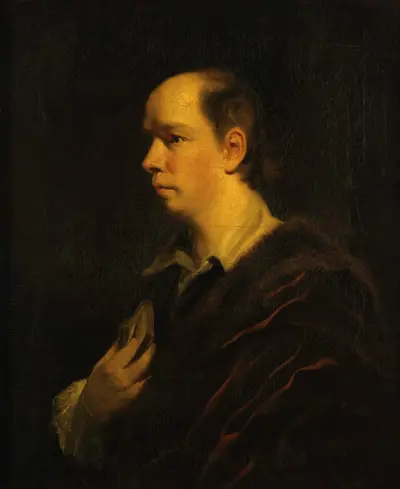
Oliver Goldsmith was an Anglo-Irish novelist, playwright and poet, who is best known for his novel The Vicar of Wakefield (1766), his pastoral poem The Deserted Village (1770), and his plays The Good-Natur'd Man (1768) and She Stoops to Conquer (1771, first performed in 1773). He is thought to have written the classic children's tale The History of Little Goody Two-Shoes (1765).
