Louis XIV Quotes
We will assist by money from our royal treasury all those who wish to reestablish old manufactures or to undertake new ones … all the merchants and traders by sea who purchase vessels, or who build new ones, for traffic or commerce shall receive from us subsidies for each ton of merchandise which they export or import on the said voyages
Subsidies for Economic Development are not a modern invention.
Louis XIV, 1638-1715, King of France, Letter to the Town Officers and People of Marseilles, August 26, 1664
Sourced by: Eigen's Political and Historical Quotations


All money has based on the Gold Standard then. But the economic output of the American colonies was increasing rapidly. If the money supply stays fixed, there is a shortage of money and this then inhibits further growth, Franklin realized this and called for an increase in the money supply. He was only 23 years old when he wrote this essay and had these insights.

This is one of the earliest, if not the earliest, statement of the undesirability of protectionism and subsidies.


This is one of the earliest enumerations of the methods by which nations might rectify an imbalance of trade.

This is one of the earliest examples of the establishment of a type of Commerce Department – a government institution to look after the commercial affairs of the state.


His government had just used force to disarm the rebellion of religious Kurds.

His predecessors had lied about the status of the Greek Economy and then squandered the money with waste, fraud, and corruption. To avoid total national bankruptcy, Greece needed a large bailout which was given subject to a set of required conditions of reform and transparency. This “austerity” package created a great hardship for many of the average Greek citizens while the wealthy who had benefitted from the previous incompetence and corruption took their money out of the country. The Greek voters elected a new government without much experience but who were committed to lifting the burden of the austerity package. The problem was that the major nations of the Eurozone, whose taxpayers would have to pay for the bailout, had been burned before by Greek government lies and incompetence and did not trust the Greeks, insisting on the austerity measures if any bailout money would be forthcoming. The new Greek government was caught in a great dilemma. Agree to the same kind of Austerity package and continue the great hardships on the people or go into Bankruptcy and leave the Eurozone the consequences of which would probably be worse. The finance minister was hoping for a compromise.

When manufacturers (and other businesses) can be convinced that they can make more money by being environmentally responsible, they will voluntarily do so. Instead of regulations or laws mandating Green policies, he suggests that government and science can move industry by arranging the contingencies so that it makes economic sense for the businesses. Things like cap and trade, tax policy, new technology, and pricing can be very productive.

America’s first political economist

There must be enough money in circulation so that all people who want to buy things will have a vehicle for paying for it else people would be reduced to barter and tade—a much less efficient mechanism. Note the importance that Franklin gives to being able to attract immigrants. This was considered extremely important in colonial America. Immigration was the main engine of growth and development. Many believe that it still is.

At the time, the economy was virtually controlled by the banks and others in the finance, as opposed to businesses that produced things or provided non-financial services to consumers and business which was that had prevailed ever since the Great Depression, when New Deal legislation controlled the banks, stock markets, and other facets of the financial industry.


In the 19th century, most socialists thought that the government was the major creator of jobs. In the 20th century, most socialists acknowledged that jobs could emanate from both the public and private sectors. Here in the 21st century, one of the world’s leading socialists, stated that private companies were necessary for full employment.

At the time, this was not popular with many socialists who had given up on the lack of fairness and equity of the capitalistic system. A century later, most politicians and political philosophers had given up on socialism ever meeting Bauer’s test, and Capitalism was well ensconced in Western Democracies.
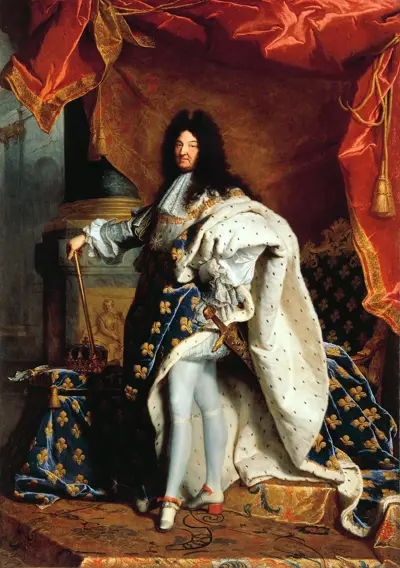
Louis XIV, also known as Louis the Great (Louis le Grand) or the Sun King (le Roi Soleil), was King of France from 14 May 1643 until his death in 1715. His reign of 72 years and 110 days is the longest recorded of any monarch of a sovereign country in European history. Louis XIV's France was emblematic of the age of absolutism in Europe. The King surrounded himself with a variety of significant political, military, and cultural figures, such as Mazarin, Colbert, Louvois, the Grand Condé, Turenne, Vauban, Boulle, Molière, Racine, Boileau, La Fontaine, Lully, Charpentier, Marais, Le Brun, Rigaud, Bossuet, Le Vau, Mansart, Charles Perrault, Claude Perrault, and Le Nôtre.
