Lee C. Bollinger Quotes
We should tread cautiously before casting judgment on foreign governments and their people.
Lee C. Bollinger, President of Columbia University, “Freeing Speech”, The Washington Post, February 15, 2015
Sourced by: Eigen's Political and Historical Quotations


He argued to take every statement or threat of violence against America or Americans made by a foreign leader, even if for local political purposes, as a clear and present danger that requires action, often including force to nullify that country's capability to harm America or to produce a regime change. Many point to Adolf Hitler who had, in Mein Kampf, told the world what he would try and do, and few paid any attention to him. On the other hand, when he was at his most dangerous and planning massive world aggression, his rhetoric was very moderate and peaceful. The vast majority of the foreign leaders who threaten America and her interests, never have acted on those threats. However, one danger is the incitement of others in the country or region who might become a threat to America as an individual or a non state terror group.


He was very sensitive to the criticism of China’s human rights record. The Chinese leadership was very proud to their accomplishments of lifting hundreds of millions of people out of poverty and eliminating hunger and starvation, and many foreigners from developed nations were seemingly inattentive to the remarkable economic success in their focus on human rights shortcomings.


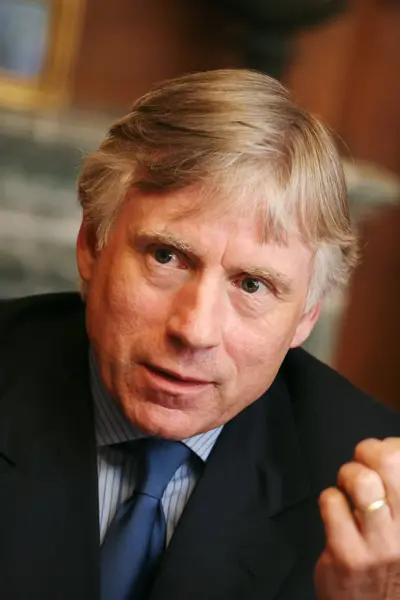
Lee Carroll Bollinger is an American lawyer and educator who is serving as the 19th and current President of Columbia University, where he is also the Seth Low Professor of the University and a faculty member of Columbia Law School. Formerly the president of the University of Michigan, he is a noted legal scholar of the First Amendment and freedom of speech. He was at the center of two notable United States Supreme Court cases regarding the use of affirmative action in admissions processes. In July 2010, Bollinger was appointed chair of the Federal Reserve Bank of New York board of directors for 2011. Previously, he had served as deputy chair. In 2004, he was honoured to be a member of the American Philosophical Society.
