Robert Purvis Quotes
We love our native country, much as it has wronged us; and in the peaceable exercise of our inalienable rights, we will cling to it
Robert Purvis, 1810-1898, Abolitionist and Underground Railroad organizer Appeal of Forty Thousan Citizens, Threatened with Disfranchisement, to the People of Pennsylvania, 1837
Sourced by: Eigen's Political and Historical Quotations

First Irish Bishop in the United States. American Catholic bishops were divided during the Civil War over the slavery question. For a bishop’s view opposing slavery, see Purcell {612351}.


Ultranationalist Secret Organization. Unlike the Italian Black hand for whom it was named, the Serbs were not interested in money. The were a right wing death squad that assassinated all who opposed a single, unitary, Serbian nation. Dimitrijevic was executed in 1917.

While Douglas and Lincoln were political opponents with little love lost between them, both were patriots. And Douglas was committed to seeing that Lincoln was inaugurated and the Union preserved, if Lincoln won the election. When Lincoln did so, Douglas traveled throughout the South trying to persuade Southerners to stay in the Union. See {584870}.


This is another example of a common practice amongst dictators and extremists of the Right and the Left. First they define “Patriotic” as accepting and following their norms, politics, regulations or laws. Then they define out any dissidents as not bona fide citizens of the nation. In the next step, the lack of citizenship and patriotism allows imprisonment, torture and even death at times. It is one thing to accuse dissidents as being citizens in opposition to the existing government; it is quite another to define them as no longer a citizen who is entitled to the respect or rights of a citizen. This was typical of both Soviet Communism in the 1950s and the followers of Senator Joseph p. McCarthy in the United States.


See {613385} ,{588836}, {613384}, {613381}.


This is sometimes referred to as the Irish Declaration of Independence.


This is a classic libertarian position.

He was a strong conservative who defended the George W, Bush administration, He was not alone in believing that in wartime, attacks and criticisms of the President and his administration give “aid and comfort to the enemy and weaken the nation’s resolve. However, he is almost unique in the level of hypocracy that he exhibited when a Democrat was next in the Presidency. The fact that we were in two major wars and incursions as well, did not inhibit him from viciously critizing President Barack Obama. He didn’t think this made him a “BAD” American and promptly forgot this quotation which came back to ic in haunt him.
In war time often we have behaved in ways we were embarrassed by in the fullness of time such as the internment of the Japanese Americans in WWII. The vast majority of the press was totally intimidated and any one who suggested that the administration might be wrong was not only accused of being themselves wrong but of being un-American and almost a traitor. O’Reiley probably did this better than most. History and events of course, showed later that these premises and claims were totally wrong. There were no weapons of mass destruction in Iraq and there was no Iraqi involvement in with Al Quaeda and September 11. Many people do not think O’Reily was a BAD American for being a ctitic in wartime and neither were the people he labeled as “BAD”. In a democracy, critism helps even if it is embarrassing to a particular administration.


The hypocricy of this slogan is almost incredible. Most of the actions of the KKK over the years have violated the spirit and the laws of America. They are opposed to many of the Bill of Rights. There was a time, before the 1970s, where members literally got away with murder in the South. When Americas laws were enforced and KKK members who broke the law were jailed and sued for monetary damages, the Klan has a very tiny membership and is constantly under survelience.

He was referring to views like those of Stephen Decatur {599442} and Carl Schurtz {33636}.
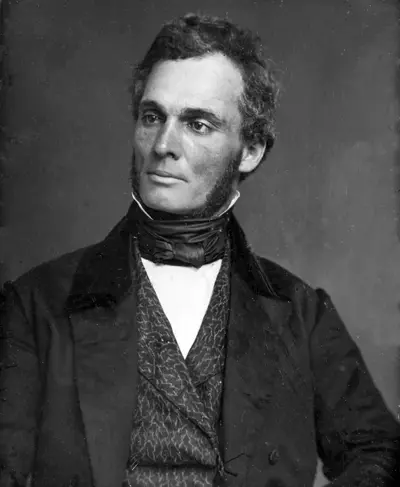
Robert Purvis was an American abolitionist in the United States. He was born in Charleston, South Carolina, and was likely educated at Amherst Academy, a secondary school in Amherst, Massachusetts. He then spent most of his life in Philadelphia, Pennsylvania. In 1833 he helped found the American Anti-Slavery Society and the Library Company of Colored People. From 1845–1850 he served as president of the Pennsylvania Anti-Slavery Society and also traveled to Britain to gain support for the movement.
