Edward Abbey Quotes
A patriot must always be ready to defend his country against his government.
Edward Abbey, 1927-1989, Writer and humorist, Abbey's Road, 1979
Sourced by: Eigen's Political and Historical Quotations

This is a classic libertarian position.


He was a strong conservative who defended the George W, Bush administration, He was not alone in believing that in wartime, attacks and criticisms of the President and his administration give “aid and comfort to the enemy and weaken the nation’s resolve. However, he is almost unique in the level of hypocracy that he exhibited when a Democrat was next in the Presidency. The fact that we were in two major wars and incursions as well, did not inhibit him from viciously critizing President Barack Obama. He didn’t think this made him a “BAD” American and promptly forgot this quotation which came back to ic in haunt him.
In war time often we have behaved in ways we were embarrassed by in the fullness of time such as the internment of the Japanese Americans in WWII. The vast majority of the press was totally intimidated and any one who suggested that the administration might be wrong was not only accused of being themselves wrong but of being un-American and almost a traitor. O’Reiley probably did this better than most. History and events of course, showed later that these premises and claims were totally wrong. There were no weapons of mass destruction in Iraq and there was no Iraqi involvement in with Al Quaeda and September 11. Many people do not think O’Reily was a BAD American for being a ctitic in wartime and neither were the people he labeled as “BAD”. In a democracy, critism helps even if it is embarrassing to a particular administration.


In his Senate confirmation hearings Frankfurter was repeatedly asked about his association with the ACLU and his views on Communism by conservative Senator Pat McCarran:


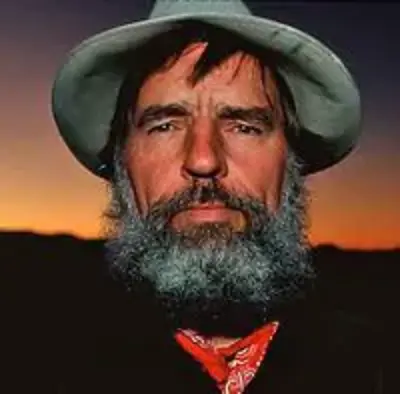
Edward Paul Abbey was an American author and essayist noted for his advocacy of environmental issues and criticism of public land policies. His best-known works include Desert Solitaire, a non-fiction autobiographical account of his time as a park ranger at Arches National Park considered to be an iconic work of nature writing and a staple of early environmentalist writing; the novel The Monkey Wrench Gang, which has been cited as an inspiration by environmentalists and groups defending nature by various means, also called eco-warriors; his novel Hayduke Lives; and his essay collections Down the River (with Henry Thoreau & Other Friends) (1982) and One Life at a Time, Please (1988).
