Howard Rheingold Quotes
We know where the television is - everything has to be a sound bite; everything has to be an image; ideas are okay as long as they don't take more than four or five seconds to explain; candidates and issues are commodities that are sold like cans of soup; entertainment is limited to what a few people believe the lowest common denominator is; and you can't talk back to it.


This quotation appears to be typical of critics’ complaints about modern media and political reform movements lowing their standards and just trying to provide entertainment for the masses. The reason that it is noteworthy is that it was written in 1909. It is typical of the same class of complaints of 100 years later.


Ronald Reagan’s media expert, Michael Deaver, developed a new approach to Presidential appearances. He realized that if the President made a 5 or 10 minute speech at an event, the Evening News would choose one or two 10-15 second excerpts, and that was what the vast majority of the country would see. Therefore, he reasoned, the words spoken meant relatively little. It was the image what would last in people’s memory. Therefore, he worked hard to concentrate on getting the right background for the President’s appearance. The Statue of Liberty, a naval ship, a factory at work. The set of images that people would have of the President in these different appearances would define the President in the minds of most people. Deaver would be more concerned that the TV camera’s showed the background scene he had planned (rather than a strange angle or just a close-up of the President’s face) than he would be about which words—sound bytes—the TV station would select. Hence Baker’s observation that words were less important than the TV images.

Responding to reporters' criticism of the shallowness of the 1988 presidential campaign:


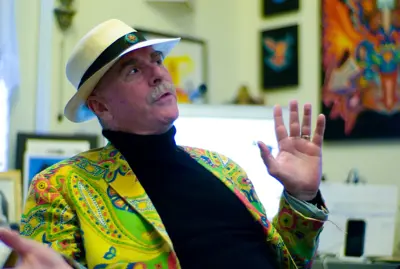
Howard Rheingold (born 1947) is an American critic, writer, and teacher, known for his specialties on the cultural, social and political implications of modern communication media such as the Internet, mobile telephony and virtual communities (a term he is credited with inventing).
