Ruth Bader Ginsburg Quotes
We have the oldest written constitution still in force in the world, and it starts out with three words, 'We, the people.'
Ginsburg, Ruth Bader, with Mary Hartnett and Wendy W. Williams. My Own Words. Simon & Schuster, 2016.


It was commonly asked of Blacks applying to register. There are few people who could give a cogent response to this. What made it terrible was that the white racist registrars had the unilateral authority to determine whether or not the oral response was adequate. Recording of responses were prohibited so that no Black who was disenfranchised could ever appeal when he/she was rejected. This is one of the thousands of techniques that were used throughout the South to prevent Negro voting. They were so egregious that Lyndon Johnson was abe to force through Southern filibusters The Voting Rights Act which has eliminated the worst of the racist restrictions on Black voting. As the worst of the racist white generation has died off, Southern discrimination in voting has lessened and the situation is better each year. By 2012 there were some who claimed that the law was no longer necessary do to changes in attitude and practice, but others worried that if there were no longer any forms of discrimination in voting, why some wanted to repeal the Voting Rights Act.


at the NSA collection of every American’s private e-mails, phone calls, and other digital communications. Referring to the NSA program of collecting information on all electronic communications of all American Citizens. See {636963} for more on the case.


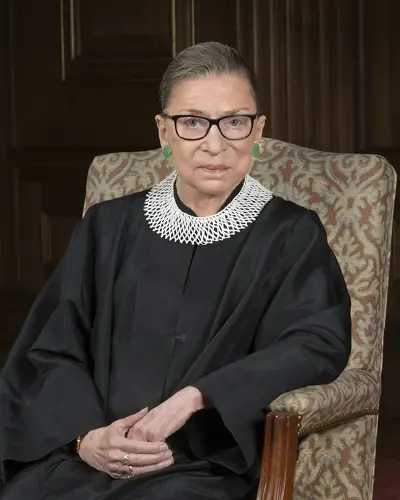
Joan Ruth Bader Ginsburg was an American lawyer and jurist who served as an associate justice of the Supreme Court of the United States from 1993 until her death in September 2020. She was nominated by President Bill Clinton, replacing retiring justice Byron White, and at the time was generally viewed as a moderate consensus-builder. She eventually became part of the liberal wing of the Court as the Court shifted to the right over time. Ginsburg was the first Jewish woman and the second woman to serve on the Court, after Sandra Day O'Connor. During her tenure, Ginsburg wrote notable majority opinions, including United States v. Virginia (1996), Olmstead v. L.C. (1999), Friends of the Earth, Inc. v. Laidlaw Environmental Services, Inc. (2000), and City of Sherrill v. Oneida Indian Nation of New York (2005).
